
Home > News
1、What is a battery separator?
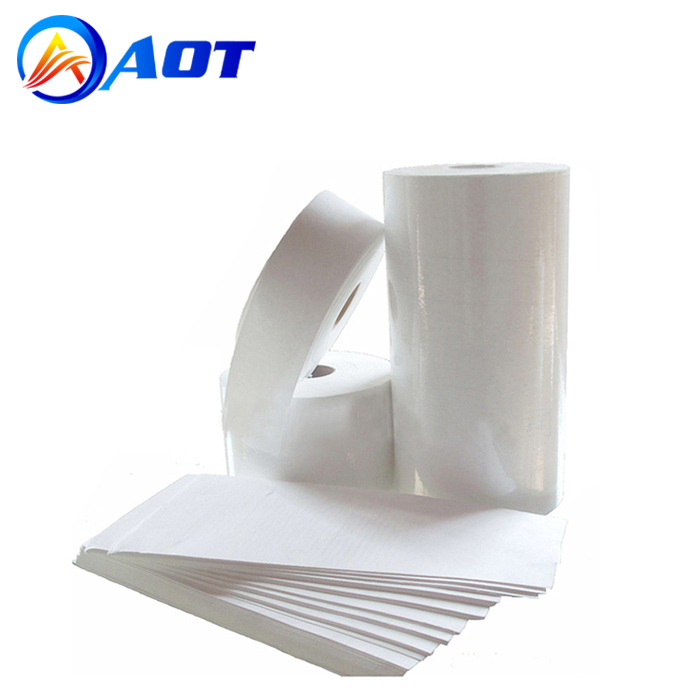
A battery separator is a porous film material located between the positive and negative electrodes in a lithium-ion battery. The core materials include polyolefins (PP/PE), ceramic coatings, non-woven fabrics, etc. Its thickness is usually between 10-20 μm, and the pore size distribution is 0.1-1 μm. It is like the "heart valve" of the battery and is a key component with relatively high technical barriers among the four core materials of a lithium-ion battery (positive electrode, negative electrode, electrolyte, and separator).
2、The core function of the battery separator
Isolation and protection: Physically separating the positive and negative electrodes to prevent direct contact between the electrodes, which could cause short circuits and pose safety risks such as battery fires and explosions. This is its most fundamental safety guarantee function.
Ion conduction: Through the porous structure on the membrane, it provides a rapid migration channel for lithium ions, ensuring smooth ion transmission during the charging and discharging process of the battery and guaranteeing the energy output efficiency of the battery.
Stable structure: Maintains the integrity of the battery's internal structure, resists mechanical impacts caused by volume changes of the electrodes and lithium dendrite growth during charging and discharging, and prolongs the battery's cycle life.
Temperature adaptation: Maintain structural stability in extreme high and low temperature environments, prevent high-temperature contraction and low-temperature cracking, and ensure the reliable operation of the battery in various scenarios.
3、How to Select High-Quality Battery Electrodes
Separator type | Material characteristics | Core advantage | Applicable scenarios | Limitations |
Polyolefin microporous Separator (PP/PE) | Polypropylene / Polyethylene blend | Lower cost and high ionic conductivity | Consumer electronics, ordinary power batteries | Poor heat stability |
Ceramic-coated Separator | Polyolefin substrate + Al₂O₃/ZrO₂ coating | Low temperature shrinkage rate (less than 5% at 150℃) and high puncture strength | New energy vehicle battery power and energy storage battery | High cost and complex processing technology |
Composite Separator (PP/PE/PP) | Three-layer co-extrusion structure | Combining high temperature resistance with high toughness | High-end power batteries, aerospace field | High production requirements and expensive prices |
4、Challenges in Battery Separator Selection and Application
(1) Why does the battery separator tend to be damaged during use?
The core reasons for the damage of the battery separator mainly include three points: Firstly, the quality issue of the separator itself, such as insufficient puncture strength (less than 10N/μm), which can be easily punctured by the burrs of the electrode sheet during battery assembly; Secondly, improper use environment, such as high temperature (above 120℃) or low temperature (below -30℃), which causes the separator material to age and become brittle; Thirdly, improper battery charging and discharging, such as overcharging or overdischarging, which leads to the generation of lithium dendrites inside the battery, and the dendrites grow and pierce the separator. It is recommended to choose a separator with a puncture strength of ≥15N/μm, and strictly control the charging and discharging voltage and usage temperature of the battery.
(2) What is the relationship between the porosity of the battery separator and the battery performance?
Porosity is a key indicator affecting the ion conductivity efficiency of the battery: If the porosity is too low (<35%), it will lead to narrow ion channels and increased internal resistance, and slower charging and discharging speed; If the porosity is too high (>55%), it will reduce the mechanical strength of the separator and easily cause separator rupture or positive and negative electrode short circuit. The ideal porosity of the separator should be controlled between 40%-50%, with uniform pore size distribution (0.1-1μm), which can ensure rapid ion conduction and maintain the structural stability of the separator. For example, energy storage batteries should preferentially choose separators with a porosity of 45%-50% to improve the battery's cycle life; While fast-charging batteries are suitable for separators with a porosity of 40%-45%, balancing the ion conduction speed and structural strength.
(3) How to solve the problem of coating detachment of ceramic-coated separators?
The detachment of the ceramic coating is mainly related to the coating material and coating process. Quality suppliers will use nano-sized Al₂O₃ particles (particle size < 50nm) and a special binder (such as PVDF), through a micro-embossing coating process to uniformly attach the coating to the polyolefin substrate, with a coating adhesion force of over 0.5N/25mm (no detachment in the 100-point test). In addition, during battery assembly, avoid vigorous stirring of the electrolyte, control the cell compactness density between 1.6-1.8g/cm³, and reduce mechanical impact on the coating.
(4) How to determine if the battery separator's high-temperature resistance meets the standard?
The thermal contraction rate test can be used to verify: Place the separator sample in a 150℃ oven for 30 minutes at a constant temperature, the lateral and longitudinal thermal contraction rates of high-quality separators should be <5%; If the contraction rate exceeds 10%, it indicates that the high-temperature resistance is not up to standard. In addition, the thermal stability test can be used to observe whether the separator shows melting or damage at 180℃. For battery separators used in power batteries, it is recommended to choose products with a thermal contraction rate of <3% at 150℃ to ensure the safety of the battery in extreme high-temperature environments.
(5) Does the thickness of the battery separator have an impact on the battery energy density?
It has a direct impact. Under the premise of ensuring the mechanical performance of the separator, the thinner the separator thickness, the higher the volume energy density of the battery. For example, reducing the separator thickness from 20μm to 12μm can increase the battery's volume energy density by approximately 10%-15%, which helps improve the range of electric vehicles. However, the separator thickness cannot be infinitely reduced; it must meet the minimum requirement of puncture strength ≥12N/μm; otherwise, it will reduce the safety of the battery. Currently, the mainstream battery separators for power batteries have a thickness of 12-16μm, and high-end products have achieved the production of 10μm thin-type separators.
Contact: Lika
Phone: +86-19906035385
Tel: 0086-592-7161550
Email: sales@aotbattery.com
Add: No.168, Zhaogang Road, Xiamen City, China
 1173116801
 sales@aotbattery.com