
Home > News
1、What is a battery stacking machine?
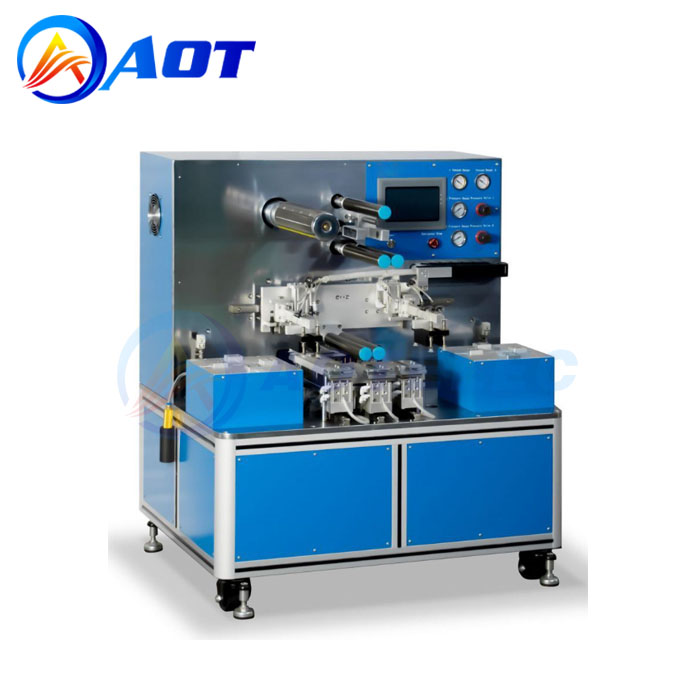
The core function of a battery stacking machine is to replace manual labor or simple tools to complete the "precise stacking" of battery electrodes and separators. Whether it is large power batteries used in new energy vehicles, or small batteries used in mobile phones or energy storage devices, they all need to be processed by it to align and press the thin layers of electrodes (some as thin as 0.05mm) and separators, and finally form an electrode cell.
It is mainly divided into three types, and different types are suitable for different scenarios:
Fully automatic stacking machine: In the battery production line of new energy vehicle manufacturers, it can operate continuously 24 hours a day, without any malfunction for 72 consecutive hours, and is suitable for large-scale standardized production of thousands or more electrode cells per day;
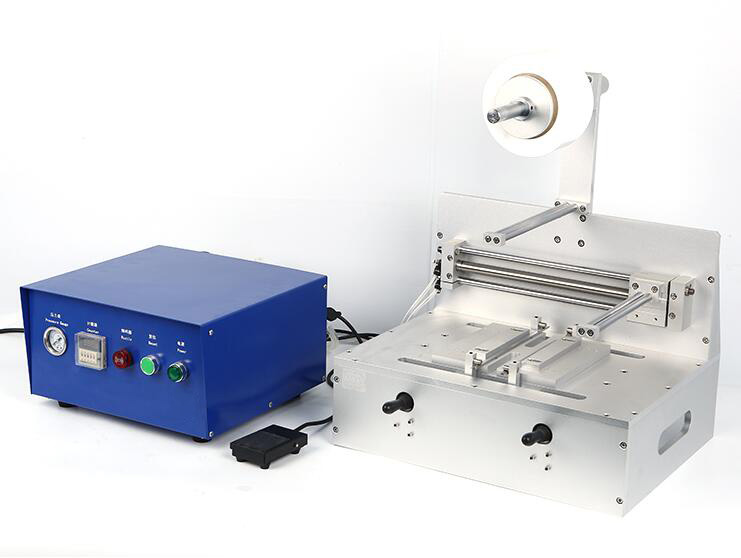
Semi-automatic stacking machine: In small-scale energy storage battery factories, for different specifications of 100Ah or larger energy storage cells, it can quickly switch production modes and complete batch production with manual assistance for material loading, suitable for small batches and multiple specifications;
Manual stacking: It can only be used for sample trial production in laboratories or small workshops. For example, when developing new 3C small batteries, it takes more than 10 minutes to manually stack 10 electrode layers, and there is a high risk of misalignment.
2、Key Factors Affecting the Use of Battery Stacking Machines
After selecting the right equipment, whether it can be used smoothly and produce consistently depends on these factors. Understanding them in the context of actual scenarios makes it easier to grasp:
Production environment: In an energy storage battery workshop in the southern rainy season, if the humidity exceeds 60%, the lamination accuracy of the fully automatic lamination machine will decrease, and the foil sheets are prone to sticking together; while in a workshop producing solid-state batteries, when the humidity is controlled below 30%, equipment with a sealed chamber can prevent the electrolyte from absorbing moisture, ensuring the performance of the battery cells;
Material compatibility: When processing flexible foil sheets with a thickness of 0.05mm, high-quality equipment can achieve continuous lamination of 5000 sheets without wrinkles through constant tension control; while ordinary equipment may have 2-3 damaged sheets every 100 sheets;
Operation Specifications: When a worker at a 3C battery factory switched the electrode specifications without following the procedures to adjust the parameters, more than 1000 electrodes subsequently became misaligned. However, in the workshop that strictly followed the instructions, the occurrence rate of similar problems was almost zero.
Maintenance Timeliness: At a certain battery factory, the fully automatic stacking machine failed to operate smoothly due to the lack of lubrication for the mechanical arms for half a year, resulting in a 8-hour production delay. Regularly maintained equipment can extend the service life of core components by 2-3 years.
3、How to choose the right battery stacking machine for yourself? (Multi-dimensional comparison)
Comparison dimension | Fully automatic stacking machine | Semi-automatic stacking machine | Handmade sheet folding |
Core scenario | Mass production of power batteries by new energy vehicle manufacturers | Production of multiple specifications of battery cells for small-scale energy storage plants | Laboratory sample trial production |
Actual performance | Operated continuously for 72 hours without any faults, with extremely small tabbing errors. | Switching of specifications can be completed within 30 minutes, with a daily output of 500 to 1000 battery cells. | It takes 10 minutes to stack 10 polarizing sheets, and they are prone to misalignment. |
Labor costs | One line only requires 1-2 people to supervise. | One line requires 3 to 4 people for material loading assistance. | One person can only produce about several dozen samples in one day. |
Yield level | Over 99% | 95%-98% | Less than 85% |
Selection core steps:
First, consider the production scale: if producing thousands of standardized battery cells per day, choose a fully automatic stacking machine; if producing several hundred cells per day with frequent specification changes, choose a semi-automatic one; for only sample production, manual stacking is temporarily sufficient;
Then, verify the scenario compatibility: for small battery production, focus on the performance of "continuously stacking 1000 electrode sheets without damage"; for solid-state battery production, it is necessary to confirm that the equipment has a sealed chamber and inert gas protection;
4、Common Problems and Solutions During Use
(1) Misalignment of laminations, insufficient accuracy: In a certain energy storage factory operating under high temperature and high humidity conditions (temperature 38℃, humidity 70%), the misalignment rate of laminations rose from 1% to 5%. Solution: First, adjust the temperature and humidity in the workshop to 15-35℃ and humidity ≤ 60%. Then, calibrate the equipment positioning system. High-quality equipment can restore its accuracy to the initial level after calibration, while for ordinary equipment, there may still be deviations.
(2) The electrodes are prone to damage and wrinkling: At a certain 3C battery factory, using ordinary equipment to process 0.05mm flexible electrodes resulted in a damage rate of 3%. After replacing with high-quality equipment and adjusting the tension control and the gripping force of the flexible robotic arm, the damage rate was reduced to below 0.5%. Careful handling of the electrodes during operation can also help to minimize the loss.
(3) Equipment failure shutdown: An ordinary stacking machine at a certain battery factory stopped operating after only 3 months due to core component wear; while the core components of high-quality equipment have a lifespan of 5 years. If proper cleaning and regular lubrication are carried out on a daily basis, the annual downtime due to failures is no more than 8 hours.
(4) Slow switching of battery cell specifications: Ordinary semi-automatic equipment takes more than one hour to switch specifications. High-quality semi-automatic equipment, through modular design, can complete the switch within 30 minutes, making it suitable for multi-specification production needs.
When choosing a battery tabbing machine, the key lies in "scenario adaptation + comparative selection": First, determine your production scale and product type. Make a judgment based on actual performance indicators such as "continuous operation time, tabbing yield, and specification switching speed", and then compare the technical strength, after-sales service, and certifications of the suppliers to avoid pitfalls. During daily use, follow the environmental requirements and operation specifications, and conduct regular maintenance. This will enable the equipment to produce steadily, helping enterprises save costs and improve efficiency.
Contact: Lika
Phone: +86-19906035385
Tel: 0086-592-7161550
Email: sales@aotbattery.com
Add: No.168, Zhaogang Road, Xiamen City, China
 1173116801
 sales@aotbattery.com