
Home > News
Against the backdrop of the global energy transition and the booming development of the new energy industry, sodium-ion batteries (SIBs) have emerged as a promising alternative to lithium-ion batteries due to sodium’s abundant reserves and low cost. Recently, a high-performance spherical hard carbon material specifically designed for sodium-ion battery anodes has made its debut, marking a significant advancement in the field of energy storage materials. With its excellent electrochemical properties and stable physical characteristics, this material is poised to address key technical challenges in the development of high-performance sodium-ion batteries and drive the sustainable growth of the new energy industry.
As the core component of sodium-ion batteries, anode materials directly determine the battery’s energy density, cycle stability, and safety. Traditional anode materials such as graphite face limitations in sodium-ion storage due to sodium ions’ larger ionic radius, resulting in low capacity and poor cycle performance. Hard carbon materials, however, have attracted widespread attention due to their amorphous structure, wide interlayer spacing, and abundant defect sites, which facilitate the rapid insertion and extraction of sodium ions. Among various hard carbon materials, spherical hard carbon stands out for its unique structural advantages, making it an ideal candidate for high-performance sodium-ion battery anodes.
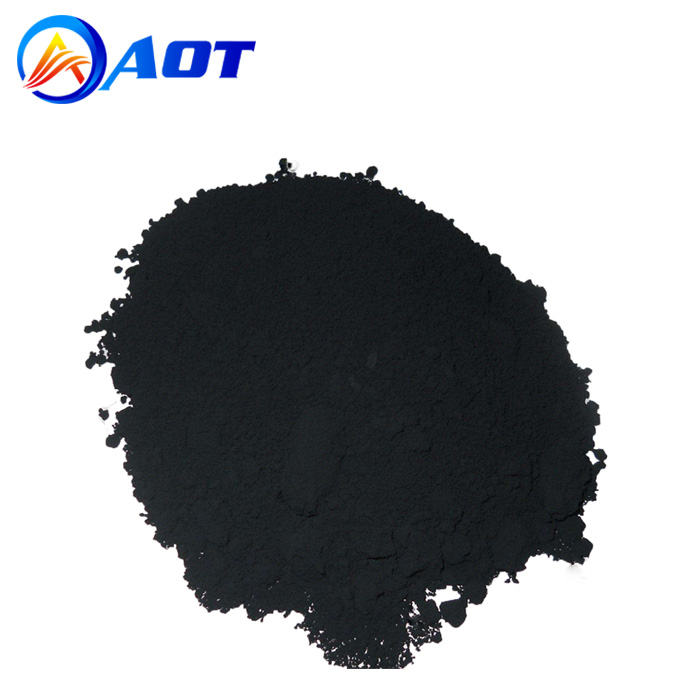
The newly launched spherical hard carbon material is the result of long-term technological research and development by the R&D team. Adopting advanced preparation processes, the material is produced from high-purity precursors through multiple precision processing steps, resulting in a regular spherical morphology and outstanding overall performance. To ensure stability during storage and transportation, the product is packaged in sealed containers with a standardized specification of 20 grams per package, catering to both laboratory R&D and small-batch production testing needs. The market price ranges from 180 to 200 US dollars per package, offering a cost-effective solution for industries and research institutions.
To comprehensively verify the material’s performance, the R&D team conducted systematic characterization using a range of internationally advanced testing equipment and methods. In particle size distribution testing, the British Malvern MS2000 laser particle size analyzer was employed based on the laser diffraction method. Test results indicate that the material has a characteristic particle size D50 of 1.5 μm. This optimized particle size not only ensures a sufficient specific surface area to provide abundant sodium-ion insertion sites but also effectively avoids particle agglomeration, laying a solid foundation for uniform dispersion during electrode preparation. A well-distributed particle size is crucial for enhancing electrode conductivity and ion transport efficiency, directly impacting the battery’s overall performance.
Tap density, a key indicator of material packing performance, has a direct influence on the volumetric energy density of sodium-ion batteries. The spherical hard carbon material was tested using the FZS4-4B automatic tap density meter developed by the Beijing Iron and Steel Research Institute, demonstrating excellent packing characteristics. The regular spherical morphology enables tight contact between particles, significantly reducing porosity and improving electrode compactness. This feature is particularly valuable for applications such as electric vehicles and large-scale energy storage systems, where space constraints demand high volumetric energy density.
Characterization of the material’s microstructure and crystal structure further highlights its advantages. Scanning Electron Microscopy (SEM) images reveal that the spherical hard carbon particles exhibit high sphericity, a smooth surface, no obvious edges or structural defects, and good dispersion without severe agglomeration. This ideal microstructure not only reduces the amount of binder required during electrode preparation, lowering internal resistance but also minimizes side reactions between the electrolyte and the electrode material, thereby enhancing battery cycle stability. X-ray Diffraction (XRD) analysis shows that the material possesses a typical amorphous structure, characterized by broad diffraction peaks. This indicates a large interlayer spacing, which provides unobstructed channels for the rapid insertion and extraction of sodium ions, laying the structural foundation for the material’s excellent rate performance.
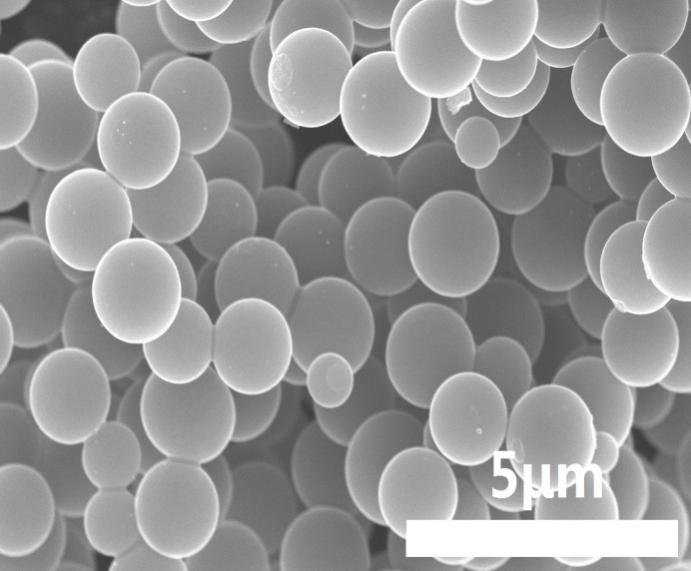
In core electrochemical performance testing, the spherical hard carbon material delivered impressive results. Using a standard three-electrode test system constructed with the Wuhan Land battery tester, charge-discharge tests conducted at room temperature showed that the material’s reversible capacity reaches 300 mAh/g. This performance far exceeds that of traditional graphite materials in sodium-ion storage and is comparable to leading hard carbon anode materials currently available. The excellent reversible capacity is attributed to the abundant sodium-ion storage sites in the material’s amorphous structure and the efficient ion transport efficiency enabled by its regular morphology, effectively meeting the stringent energy density requirements of high-performance sodium-ion batteries.
Industry experts note that the successful development of this spherical hard carbon material not only fills domestic technical gaps in related fields but also enhances competitiveness in the global market. Its outstanding performance advantages open up broad application prospects in various sectors, including electric vehicles, portable electronic devices, and large-scale energy storage power stations. For instance, in electric vehicles, sodium-ion batteries using this material as the anode can significantly improve driving range, extend battery lifespan, and reduce overall vehicle operating costs. In energy storage, its excellent cycle stability ensures the long-term efficient operation of energy storage systems, providing strong support for the integration of renewable energy sources such as solar and wind power.
Currently, the global new energy industry is in a critical period of accelerated development, and technological innovation in energy storage materials is driving industrial progress. The launch of this spherical hard carbon material not only provides a new solution for sodium-ion battery anode materials but also promotes the coordinated development of upstream and downstream industrial chains. The R&D team stated that they will continue to increase investment in technological research and development. On one hand, they will optimize the preparation process to reduce production costs and promote large-scale application of the material. On the other hand, they will further improve the material’s capacity and cycle stability through modification technologies such as doping and compounding, driving the sodium-ion battery industry toward higher energy density, longer cycle life, and lower costs.
As the concept of green and low-carbon development gains widespread acceptance, the new energy industry enjoys broad prospects. The timely launch of this high-performance spherical hard carbon material provides key support for the technological upgrading of the sodium-ion battery industry and is expected to accelerate the popularization and application of new energy products in various fields. With the driving force of technological innovation, more high-performance energy storage materials will emerge in the future, making greater contributions to global energy transformation and sustainable development.
Contact: Lika
Phone: +86-19906035385
Tel: 0086-592-7161550
Email: sales@aotbattery.com
Add: No.168, Zhaogang Road, Xiamen City, China
 1173116801
 sales@aotbattery.com