
Home > News
1. What are Coin Cell Cases?
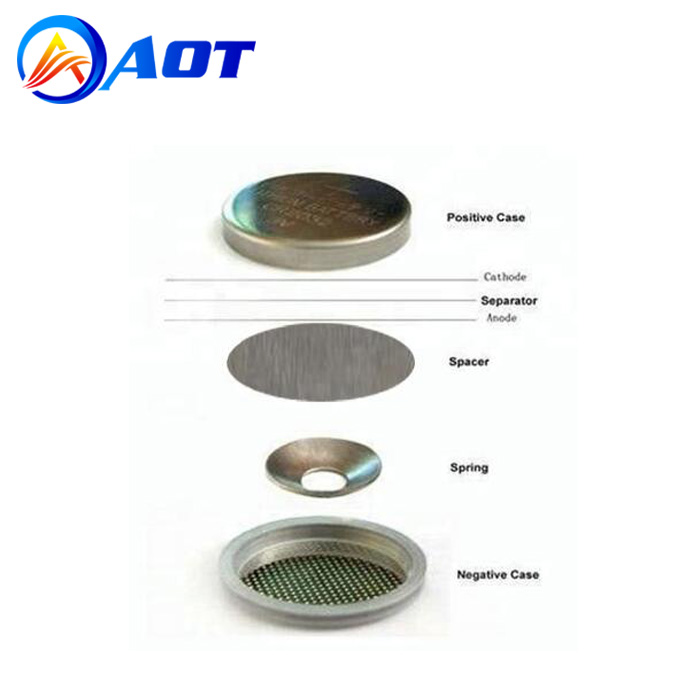
Coin Cell Cases (button battery cases) are precision structural components that encapsulate the core components of button batteries. They are widely compatible with mainstream button battery models such as CR2032, CR2025, and CR1220, and are key carriers that ensure the safe operation and performance of batteries. Their structure follows standardized design and mainly consists of three parts: the top cap (marked with a "+" symbol) as the positive electrode, the bottom cap (marked with a "-" symbol) as the negative electrode, and the insulating ring and sealing components between them. This design not only achieves electrode separation to prevent short circuits but also locks the electrolyte to prevent leakage.
From the perspective of material, the main body of the case is mostly made of metal materials: 304 stainless steel is the basic choice due to its high strength and good electrical conductivity, while 316 stainless steel is more favored in high-voltage battery scenarios due to its stronger resistance to electrolyte corrosion. Nickel-plated steel further enhances anti-rust and conductivity through the coating, and aluminum is used in specific portable devices due to its lightweight advantage. Insulation and sealing components commonly use insulating plastics such as polypropylene (PP) and polyethylene (PE), and in high-end scenarios, polytetrafluoroethylene (PTFE) is selected as the sealing gasket due to its stronger chemical stability. It is worth noting that their dimensions strictly follow the IEC 60086 standard, such as the CR2032 case with a diameter precisely controlled at 20mm and a height of 3.2mm, ensuring compatibility with device sockets.
2. The Core Role of Coin Cell Cases
(1) The "First Line of Defense" for Safety Protection
The electrolyte inside button batteries is corrosive. The sealing structure of the case, formed by rubber or silicone gaskets, provides a tight seal to effectively prevent electrolyte leakage and avoid erosion of the device's circuit board. At the same time, the presence of the insulating ring completely isolates the positive and negative electrodes, eliminating the risk of short circuits from a physical structure perspective. This is particularly crucial in precision or implantable devices such as watches and pacemakers.
(2) Performance Maintainer with Stable Performance
The metal casing serves as an electrode extension, and its conductivity directly affects the battery's output efficiency. Compared to ordinary steel, the nickel-plated steel casing can reduce the battery's internal resistance by more than 15%, ensuring stable power supply for remote controls, sensors, and other devices. In extreme environments, the 316 stainless steel casing can withstand temperature fluctuations from -40°C to 85°C. Combined with PTFE seals, it enables the battery to have a lifespan of over five years in outdoor monitoring equipment. Additionally, the standardized size design ensures a tight fit between the casing and the battery holder, preventing sudden device shutdowns due to poor contact.
(3) Scene-adapted "Function Expanders"
For special requirements, the shell can be customized for functions: The shell with a Kapton window used in laboratory research can observe the internal reaction process of the battery in real time through a 0.18mm thick window material in combination with X-ray analysis; the mesh shell dedicated to lithium-air batteries meets the battery's oxygen demand through a breathable structure. In batch storage scenarios, the multi-compartment storage shell can independently fix each battery to prevent electrode damage from collisions during transportation.
3. Scientific Selection Method for Coin Cell Cases
(1) Battery Model and Scene as the Primary Basis
The first step in selection is to precisely match the battery model. Different specifications such as CR2016 (16mm×1.6mm) and CR2450 (24mm×5.0mm) must correspond to dedicated shells. A deviation of 0.1mm in size may lead to assembly failure or poor contact. From the perspective of application scenarios:
Consumer electronics field (watches, calculators): The basic model of 304 stainless steel + PP insulating ring is preferred to balance cost and reliability.
Industrial equipment field (sensors, IoT nodes): It is recommended to use 316 stainless steel shells with silicone seals to adapt to humid and dusty workshop environments.
Laboratory research field: Selectable disassemblable sets with springs and gaskets are needed for convenient electrode material replacement. Special shells with Kapton windows are suitable for in-situ characterization experiments.
(2) Focus on Material and Sealing Performance Selection
Material selection should be combined with battery characteristics: When the battery voltage exceeds 4.5V, ordinary stainless steel is prone to corrosion by the electrolyte, and at this time, aluminum-coated shells or 316 stainless steel materials must be used. Tests by a certain battery research enterprise show that these materials can reduce the corrosion rate of the shell by 90%. Sealing performance should focus on the material of the sealing element: PP gaskets are sufficient for normal temperature scenarios, while PTFE gaskets should be used in high-temperature or chemical environments. Combined with O-ring design, IP67-level waterproof and dustproof can be achieved.
(3) Balance Compatibility and Cost Control
The shell needs to be perfectly compatible with the battery holder of the equipment. For example, horizontal straight insertion type shells are suitable for circuit board integration, while shells with pins and card-type holders are more convenient for manual assembly. In terms of cost, when purchasing in bulk, the basic model of 304 stainless steel can be prioritized; although high-end scenarios need to bear the higher cost of 316 stainless steel shells, it can significantly reduce maintenance costs in the long run. In addition, it is advisable to choose products with a warranty of more than one year to avoid risks caused by material defects.
4. Common Misconceptions and Tips for Avoiding Pitfalls
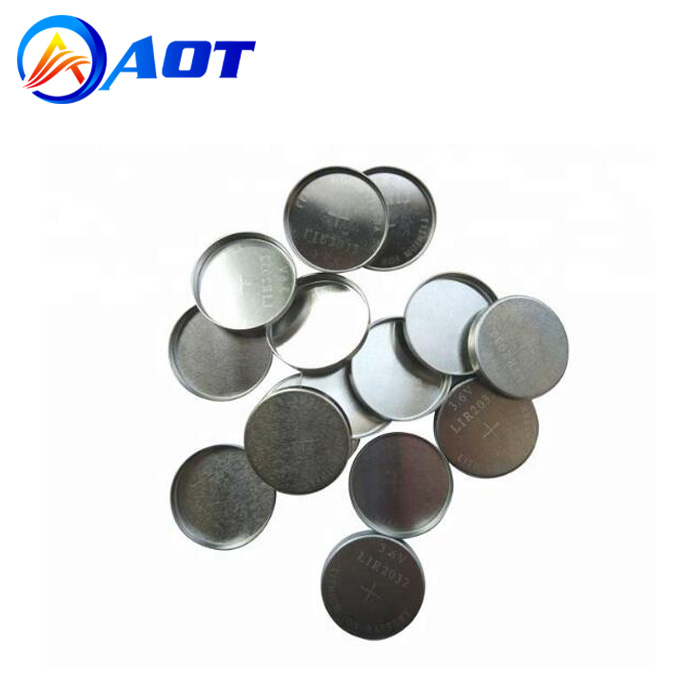
Common misconceptions include "only looking at the price and not the material" - low-cost ordinary steel casings are prone to rust in humid environments, which may increase equipment maintenance costs; "ignoring the sealing test" - legitimate products must pass a 72-hour electrolyte immersion test without leakage, and a test report should be requested when purchasing. For research and development scenarios, it is necessary to avoid "using a universal casing for all experiments": testing high-voltage batteries must use corrosion-resistant materials, while in-situ analysis requires a dedicated window-type casing. Incorrect selection may lead to distorted experimental data.
Contact: Lika
Phone: +86-19906035385
Tel: 0086-592-7161550
Email: sales@aotbattery.com
Add: No.168, Zhaogang Road, Xiamen City, China
 1173116801
 sales@aotbattery.com