
Home > News
1.What is Battery Coating Machine?
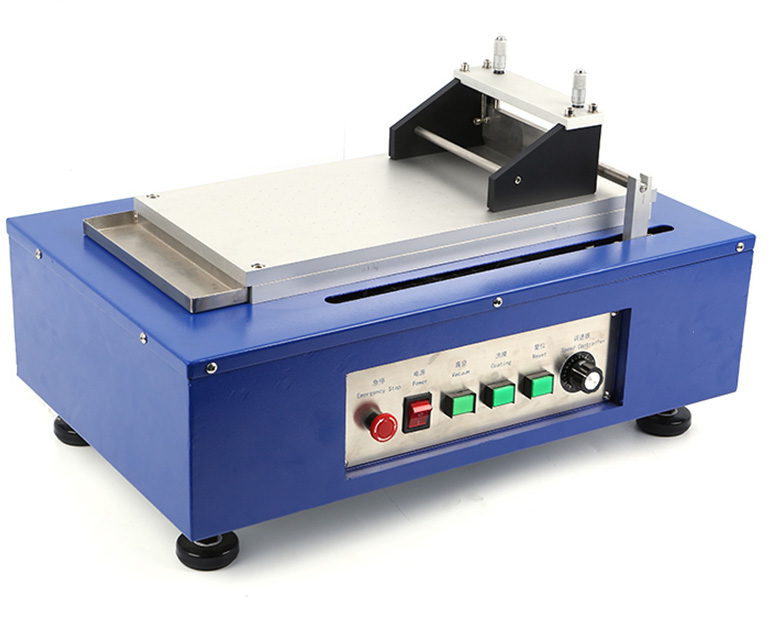
Battery Coating Machine (a key machine for manufacturing lithium batteries and sodium-ion batteries) is mainly used to evenly apply the battery-specific pastes (such as lithium iron phosphate and ternary materials for the positive electrode, and graphite for the negative electrode) onto metal sheets (aluminum for the positive electrode and copper for the negative electrode), then through drying and pressing, to form the core component of the battery - the electrode sheet.
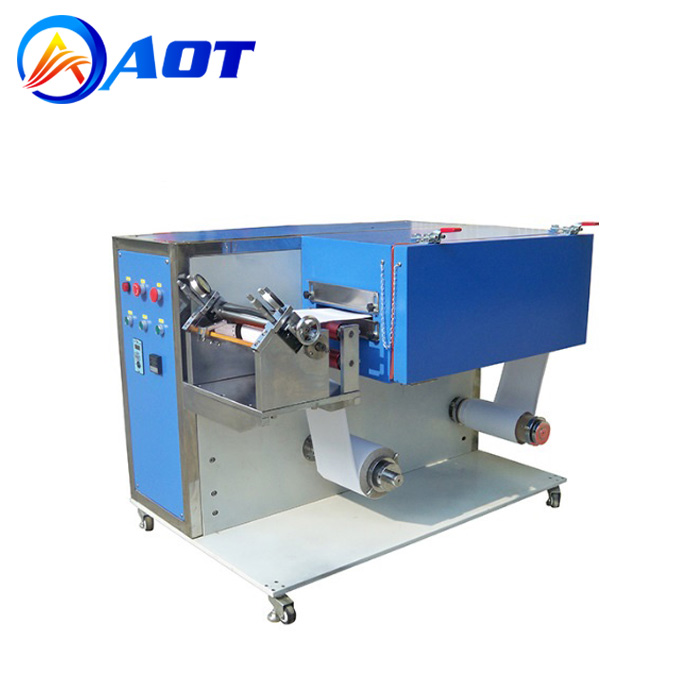
Battery film coating machine consists of five key parts: the feeding system (responsible for storing and transporting the pastes, and also capable of controlling the consistency of the pastes), the coating system (with different types of coating heads, which can precisely control the coating thickness), the drying system (using hot air or infrared rays to dry the coating to prevent it from falling off), the winding and unwinding system (able to automatically wind and unwind the metal sheets, and also correct the deviation), and the control system (using a computer to control the machine's operation and record production data).
2. The core function of the Battery Coating Machine
Producing the core components of batteries: This is its most crucial role - evenly coating the battery-specific pastes (such as lithium iron phosphate, ternary materials for the positive electrode, and graphite for the negative electrode) onto metal sheets (aluminum sheets, copper sheets), then drying and pressing them, ultimately forming electrode sheets. Without this machine, it would be impossible to produce the core components of batteries that can store and supply electricity.
Ensuring basic battery performance: Whether the coating produced by this machine is uniform or not, and whether the thickness is appropriate, directly determines how much electricity the battery can store (range) and how many times it can be charged and discharged (lifespan). It also affects whether the battery will heat up during use and whether there are safety risks (such as short circuits).
Adapting to different production needs: In the laboratory, it is used for small-scale experiments to verify the quality of the paste formula; during mass production in factories, it is used for efficient production to meet the demand for large-scale battery manufacturing, and is a key equipment connecting "research and development" and "mass production".
3. Key Factors Affecting the Working Effect of Battery Coating Machine
The condition of the slurry itself: the viscosity of the slurry (too thin will result in uneven coating, too thick will cause excessive coating); the size of the particles (too large particles may clog the machine and scratch the coating); whether it is mixed evenly (if not mixed well, there will be lumps, resulting in defects in the coating); all these factors will affect the coating effect.
The parameter settings of the machine: if the coating speed is too fast, the slurry cannot be evenly coated before entering the drying process; if the speed is too slow, it will affect the efficiency; if the coating thickness is not set accurately, if the drying temperature is too high (it will damage the slurry) or too low (it will not dry and may fall off), it will deteriorate the quality of the electrode sheet.
The condition of machine components: Is the coating head worn out? Are there any remaining coatings (which can cause scratches and inconsistent thickness in the coating)? Can the feeding and rewinding system correct the deviation (if the metal sheet deviates, it will cause the coating to be misaligned)? Can the feeding system deliver materials stably (if the feeding is inconsistent, the coating will be uneven in thickness)? The condition of these components directly affects the performance of the machine.
Production environment conditions: The extreme temperature and humidity in the workshop (such as being too humid) will affect the viscosity of the coating material, thereby causing uneven coating; too much dust in the environment will fall on the coating material or the metal sheet, resulting in defects on the electrode plate.
4. How to select the appropriate battery coating machine
(1)clearly define the type of battery you want to produce. Is it a power battery for automobiles, an energy storage device battery, a consumer-level battery like a mobile phone battery, or an emerging sodium battery? Also, determine whether to use the "wet coating" or "dry coating" process, and consider whether the equipment can be compatible with the materials of the anode and cathode (such as common lithium cobalt oxide, lithium iron phosphate cathodes, and graphite anodes).
(2)key performance should be clear. Firstly, "even coating" is crucial as it directly affects the quality and lifespan of the battery. When choosing, focus on whether it can be coated evenly; secondly, "fast coating" is important. For small production lines, a speed of 20-50 meters per minute is sufficient. For medium and large production lines for power batteries, a speed of 80-120 meters per minute should be selected to avoid insufficient speed or waste of production capacity; finally, "wide coating" is necessary to cover the size of the battery electrode sheet and have neat edges with minimal material waste.
(3)the equipment should be durable and flexible to adjust. Core components must be reliable. For example, the "coating head" for applying the slurry should be wear-resistant, the "oven" for drying should have stable temperature, and the mechanism for storing and releasing materials should be able to automatically control the force; it should also be able to adapt to different types of slurry and reserve upgrade space to facilitate future expansion of production capacity or change of production processes.
Contact: Lika
Phone: +86-19906035385
Tel: 0086-592-7161550
Email: sales@aotbattery.com
Add: No.168, Zhaogang Road, Xiamen City, China
 1173116801
 sales@aotbattery.com