
Home > News
In the mass production scenarios of new energy power batteries, energy storage batteries, and nickel-hydrogen batteries, the conductivity, porosity, and stability of the electrode substrate directly determine the cycle life, charging and discharging efficiency, and safety factor of the battery. Many battery manufacturers often encounter problems such as high internal resistance, severe heating during large current charging and discharging, and non-compliance with cycle times during production. The main cause is usually the use of inferior metal electrode substrates. Nickel metal foam
, as the core porous substrate of batteries, with its three-dimensional net-like structure, has become the preferred material for electrode preparation in nickel-hydrogen batteries, energy storage batteries, and power batteries.
1. Practical application scenarios: How does nickel metal foam empower battery production?
Unlike ordinary metal sheets and metal meshes, the core advantages of battery-specific nickel metal foam lie in its high strength, long-term, and high-load mass production scenarios, with stable and controllable performance. In the coating, rolling, and formation processes of large-scale new energy battery production, the ordinary nickel mesh substrate is prone to deformation, uneven pore size, and coating detachment after continuous high-speed coating production for 8 hours, resulting in an attachment amount deviation of more than 8% and directly causing inconsistent batch performance of the battery.
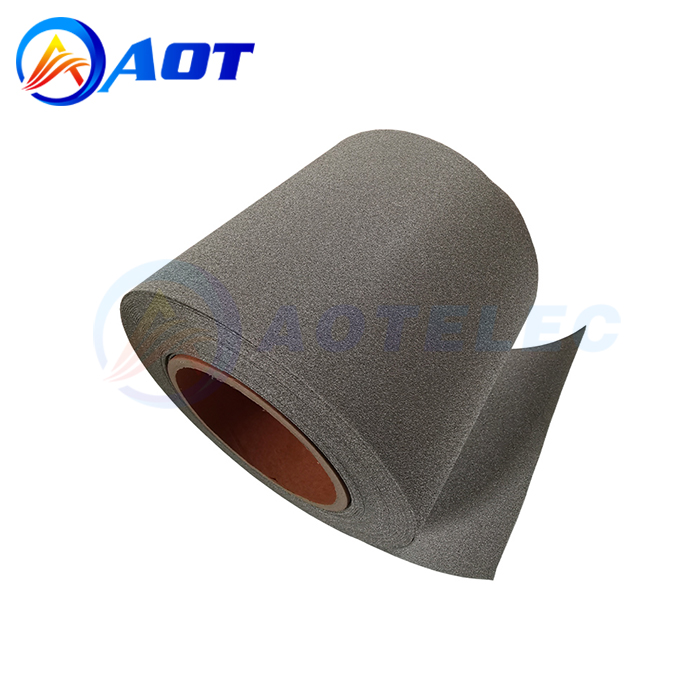
However, high-quality battery-grade nickel metal foam, under industrial mass production at a constant temperature of 60°C and continuous 72-hour high-speed coating and rolling conditions, can maintain a pore size uniformity error of ≤ 1% and no collapse deformation of the structure, and the adhesion of the slurry is stable and meets the standards. In the full charge and discharge cycle testing scenarios of energy storage batteries, batteries equipped with high-quality nickel metal foam substrates, after 1000 deep charging and discharging cycles, the capacity retention rate can still reach over 92%; in extreme working conditions such as high temperature of 45°C and low temperature of -20°C in outdoor storage scenarios, their conductivity does not show significant degradation, perfectly adapting to complex usage environments such as household energy storage, photovoltaic energy storage, and vehicle backup batteries. At the same time, in the refined production of small nickel-hydrogen batteries and backup batteries for digital devices, the high-porosity nickel foam can significantly increase the active material loading capacity, effectively improving the battery capacity and discharge stability.
2. Industry comparison analysis: Nickel metal foam vs. ordinary nickel mesh and nickel foil substrates
When most battery manufacturers purchase, they will be torn between nickel metal foam, ordinary woven nickel mesh, and pure nickel foil substrates. The adaptability scenarios, performance shortcomings, and production costs of these three materials vary greatly, and they are also the core standards to distinguish high-quality suppliers from ordinary suppliers.
The ordinary pure nickel foil substrate is dense and has no pores, and is only suitable for low-rate, low-current batteries. Its biggest drawback is that it cannot carry a large amount of electrode active slurry, has poor heat dissipation during charging and discharging, and is prone to overheating and bulging under high current conditions, with a cycle life of only 300-500 times, only suitable for low-end disposable batteries and small digital batteries, and completely unable to meet the production standards of power batteries and energy storage batteries.
Conventional woven nickel mesh has low cost, but its structure is loose and the pore size is chaotic. After rolling processing, it is prone to deformation. In the battery formation process, the loose mesh structure will cause slurry detachment and large fluctuations in internal resistance, resulting in a batch production yield of only about 85%, and the later after-sales failure rate is high. It seems that the purchase cost is low, but it actually significantly increases production losses and after-sales costs.
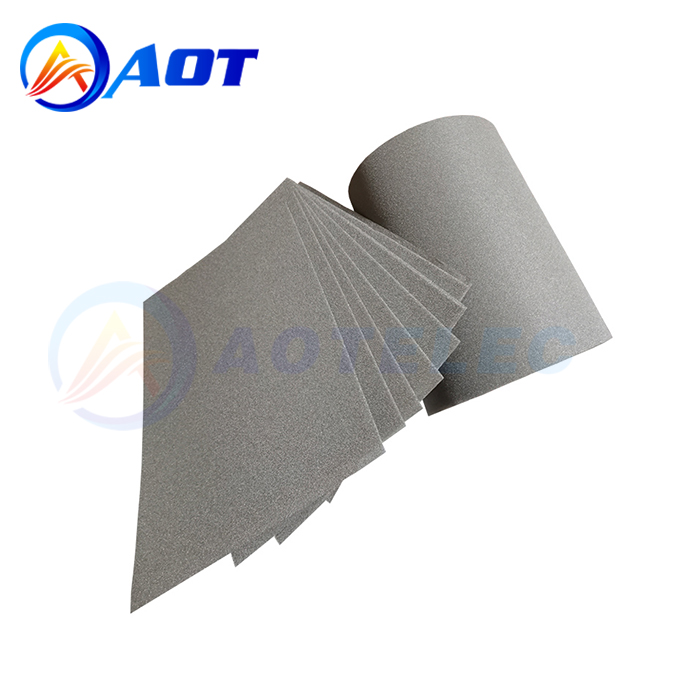
Battery-specific nickel metal foam adopts a three-dimensional porous net-like structure with a porosity of over 95%, uniform pores, and a strong structure. Compared with the other two materials, its slurry adhesion capacity is improved by more than 3 times, and its heat dissipation, conductivity, and ventilation performance are comprehensively optimized. There is no heat imbalance problem during large current charging and discharging, and the battery cycle life is improved by 60%, with a batch production yield of up to 99%, making it the optimal substrate for mass production of mid-to-high-end new energy batteries. High-quality suppliers' nickel metal foam can also be customized with pore size, thickness, and porosity according to customer requirements, adapting to the production needs of different specifications of batteries, which is a core advantage that small workshops cannot achieve.
3. Common questions and answers
(1) Why do some nickel metal foams tend to lose powder and increase internal resistance after use?
This problem is 90% caused by inferior nickel foam substrates. Products from small workshops have issues such as uneven pore size, rough surface, insufficient purity of the substrate, and loose internal structure. After roller pressing, the structure is damaged, and the slurry cannot be firmly attached. After long-term charging and discharging, powder loss and delamination occur, leading to continuous increase in internal resistance and performance degradation of the battery. High-quality battery-grade nickel foam uses high-purity nickel raw materials, with an integrated molding structure that is dense and has a smooth surface without burrs. This fundamentally eliminates the problems of powder loss and internal resistance fluctuations.
(2) Is a higher porosity of nickel metal foam always better?
Not necessarily. It needs to be adapted to the battery application scenario. Conventional energy storage batteries and power batteries are suitable for a porosity of 85%-90%, which takes into account both the slurry carrying capacity and structural stability. Products with extremely high porosity have a higher loading capacity, but the structure is relatively soft. Roller pressing is prone to deformation, and they are only suitable for small and lightweight nickel-hydrogen batteries. Professional suppliers will precisely match parameters based on the customer's battery type and production process to avoid production failures caused by incompatible parameters.
The quality of nickel metal foam directly determines the stability, lifespan, and yield rate of new energy batteries. In the homogenized competition in the industry, high-quality battery-grade nickel metal foam, with stable working conditions, excellent performance, and controllable production accuracy, becomes the core material for new energy battery manufacturers to reduce costs, increase efficiency, and enhance product competitiveness. When manufacturers purchase, they should not simply compare prices. They need to carefully check the purity of the substrate, pore uniformity, working condition stability, and testing certifications. Choose a customizable, high-standard, and production-secure professional supplier to improve the quality of battery products from the source.
Contact: Lika
Phone: +86-19906035385
Tel: 0086-592-7161550
Email: sales@aotbattery.com
Add: No.168, Zhaogang Road, Xiamen City, China
 1173116801
 sales@aotbattery.com