
Home > News
1.What is a battery coating machine?
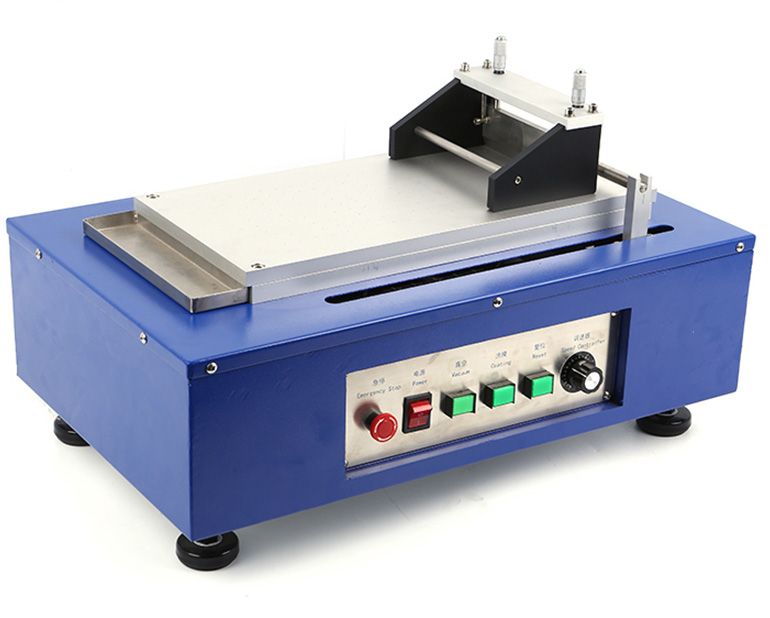
The battery coating machine is a core dedicated equipment for the production of lithium battery electrode sheets. It operates in a continuous roll-to-roll mode and its main function is to evenly coat the prepared positive and negative electrode pastes onto the surface of the metal current collector: the positive electrode paste is coated onto the Aluminum Foil, and the negative electrode paste is coated onto the copper foil. The entire equipment is composed of a unwinding mechanism, coating nozzles, multiple temperature-controlled drying ovens, a constant tension control system, an online thickness measuring device, and a winding mechanism.
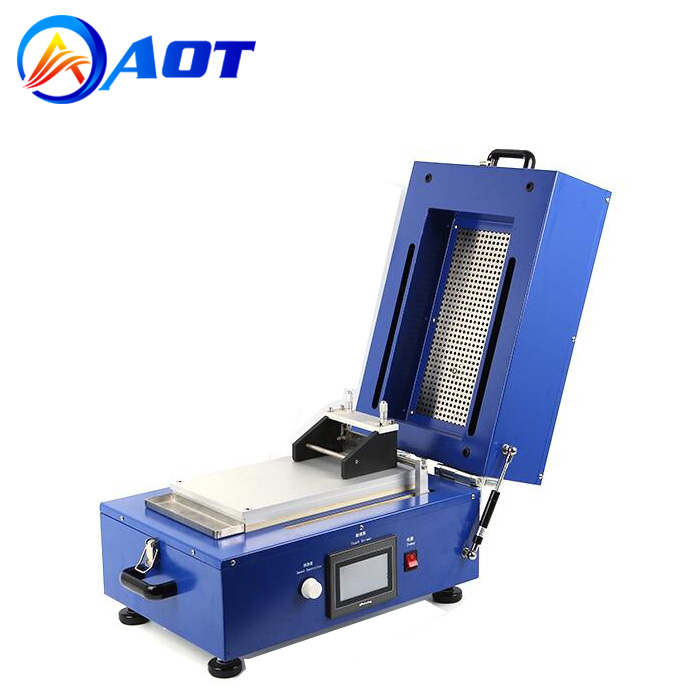
The mainstream models on the market are divided into three main process routes: slit extrusion coating, transfer coating, and scraper coating. The equipment width, coating speed, and surface density control accuracy can be differentiated according to the production line positioning. From small to laboratory R&D pilot lines (with a width of 100–300mm), to large ones such as high-speed production lines in battery power plants (with a maximum width of 1800mm). The coating process is at the forefront of cell manufacturing, and the coating quality will continuously affect all subsequent processes such as roll pressing, cutting, winding, and filling, and is the source process that determines the consistency of the cell.
2. What is the function of the battery coating machine?
(1) Precisely form the electrode coating, laying the foundation for the basic performance of the battery. The coating machine directly controls the thickness, surface density and uniformity of the electrode coating. In the mass production scenario of energy storage batteries, if the coating thickness fluctuates by more than 5%, the local load of the electrode sheet will be uneven, and the battery will easily accelerate its degradation during long-term cycling, resulting in a reduction of more than 30% in cycle life. Stable coating can ensure that the three core indicators of energy density, internal resistance and cycle life meet the design standards.
(2) Ensure consistency in mass production and reduce the defect rate of finished products. The production lines for power batteries and energy storage batteries need to operate continuously for 7×24 hours without interruption. High-performance coating machines, combined with closed-loop tension control and online weighing systems, continuously adjust the coating parameters to reduce the differences in the foil between batches. If the foil consistency is poor, the finished battery cells will have large pressure differences and difficulty in sorting, and in severe cases, the entire batch of battery cells can only be downgraded, thereby increasing production costs.
(3) Meeting the process requirements for different battery products on various tracks The 3C digital thin battery cells require ultra-thin coatings and micrometer-level tolerances; energy storage batteries prefer thick coating processes and aim for long cycle life; power lithium batteries balance production capacity and safety. The coating machine can be adapted to different formula pastes by replacing the die head, adjusting the belt speed, and controlling the temperature in different zones, while also accommodating both R&D prototyping and mass production delivery.
(4) Control solvent evaporation and avoid electrode defects and safety risks. The drying section after coating is responsible for the evaporation of the solvent in the paste. Reasonable segmented temperature-controlled air ducts can prevent common defects such as cracking, bubbles, pinholes, thick edges, etc. for the coating; for the positive electrode production line using NMP solvent, a combination of explosion-proof and waste gas recovery structures is provided to meet the safety production standards of the workshop.
3. Core Application Scenarios
(1) Production Line of Battery Power Plant
The battery power plant for vehicle assembly. The entire production line operates at full capacity and continuously. The coating line is often the bottleneck process. The equipment continuously rolls the foil at a speed of 80–120m/min, and the wide base material is continuously double-sided coated. The equipment needs to work stably in high-temperature, dusty, and solvent-volatile environments for a long time. It is required that under continuous operation for 72 hours, the density deviation of the coating layer be controlled within ±2% to reduce the downtime for maintenance and debugging.
(2) Large-scale Energy Storage System (ESS) Battery Production Line
For industrial and commercial energy storage and household storage batteries, the focus is not on achieving the highest energy density, but rather on achieving a long cycle life of over 6,000 times. The production line generally adopts thick coating technology, and has higher requirements for the uniformity of coating. Thick coatings are more prone to problems such as uneven drying and uneven internal stress. Therefore, customers tend to choose slit extrusion coating machines with multiple independent temperature-controlled drying functions and vacuum edge suction capabilities.
(3) Laboratory and pilot-scale R&D lines
Material enterprises, universities, and battery startups use these lines for sample production of new materials and formula testing. The equipment has a narrower width and a lower operating speed (5–20m/min). They prioritize the wide range of adjustable parameters and low slurry loss, as well as the convenience of quickly comparing the coating effects of different formula slurries, providing data support for the finalization of subsequent mass production processes.
4. Horizontal comparison of coating process
Slit extrusion coating: The mainstream solution for high-end mass production in the industry. The slurry is extruded quantitatively through a precision die head, with a surface density uniformity of ±1% to ±2%. It can support high-speed mass production; the equipment cost is relatively high, and the processing accuracy of the die head is demanding, and regular cleaning is required for maintenance. It is suitable for large-scale mass production lines of power batteries and energy storage.
Transfer coating: A cost-effective middle-ground solution. The slurry is first coated onto the coating roller, and then transferred onto the foil material. The uniformity is ±3% to ±5%. The equipment investment is lower and maintenance is simple; the maximum operating speed is lower than that of the slit extrusion machine, and it is mostly used in small and medium-sized lithium battery factories.
Scraping blade coating: An entry-level low-cost solution that controls the coating thickness through the scraping blade gap. The initial investment is the lowest, but the uniformity is only around ±10%. The belt running speed is slow, and it is mostly used for laboratory small-scale trial production and sampling, not suitable for large-scale production of power batteries.
5.Common High-frequency Questions
(1) How to ensure stable coating uniformity across different production batches?
On one hand, strictly control the material input standards to stabilize the viscosity and solid content of the material; on the other hand, the equipment is equipped with an online weighing closed-loop regulation system, and the die head and coating roller are calibrated regularly; at the same time, establish standardized cleaning and maintenance procedures to avoid residual materials causing streaks and pinholes.
(2) When choosing a coating machine, what indicators should the tension control parameters consider?
The negative electrode of thin copper foil is highly prone to stretching and deformation. It is advisable to select a model with tension control accuracy of ≥ ±1% and real-time feedback from multiple sensors. The larger the width and thinner the foil, the higher the requirement for tension stability.
(3) How to solve common defects of the coated sheets in the coating machine?
Pinholes and bubbles: Enhance the vacuum degassing of the slurry, and increase the precise filtration of the slurry; Streaks and uneven thickness: Regularly clean the die head, and check for die head wear; Thick edges at the edges: Turn on the vacuum edge suction device, and optimize the airflow structure of the duct.
Contact: Lika
Phone: +86-19906035385
Tel: 0086-592-7161550
Email: sales@aotbattery.com
Add: No.168, Zhaogang Road, Xiamen City, China
 1173116801
 sales@aotbattery.com