
Home > News
1、What is a Battery Drying Oven?
The Battery Drying Oven (also known as battery drying equipment) is a key process equipment in the production of new energy batteries. It is specifically designed for the drying treatment of electrode sheets, cells, battery modules and raw materials (such as positive powder and negative paste) of lithium batteries, sodium batteries, etc. By precisely controlling parameters such as temperature, humidity, and vacuum degree, it removes moisture, organic solvents and volatile impurities from the materials, ensuring stable battery electrochemical performance, extended cycle life and safety. Its core function is to control the moisture content of electrode sheets below 50 ppm, and the moisture content of cells ≤ 10 ppm. It is widely used in large-scale production and laboratory research of cylindrical, square, and pouch batteries, covering fields such as new energy vehicles, energy storage stations, and consumer electronics. It is one of the key links that determine the energy density and safety performance of batteries. According to its structure and process, it can be classified into vacuum drying ovens, hot air circulation drying ovens, and tunnel drying ovens, etc., and is suitable for different production capacities and precision requirements.
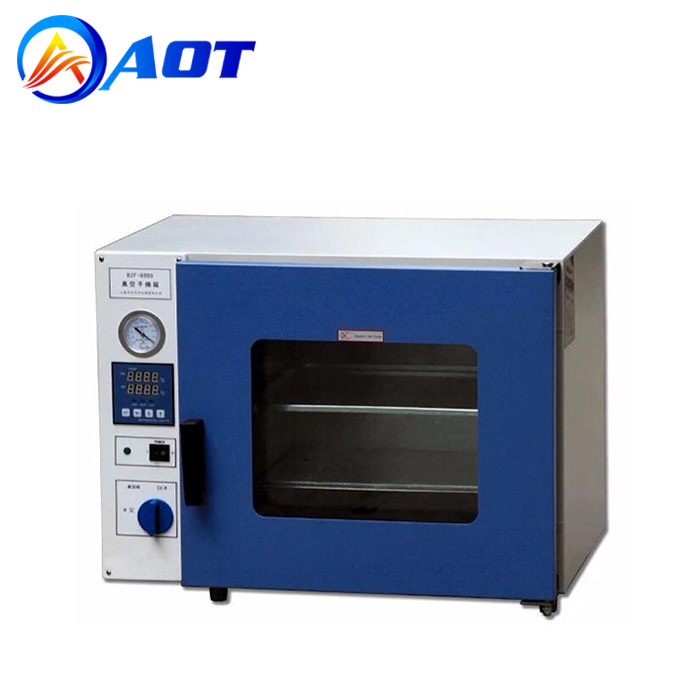
2. Core application scenarios: Verifying equipment performance through actual data
A high-quality Battery Drying Oven needs to maintain stable performance in complex production environments. The following presents the core advantages of the equipment through specific scenarios and quantitative data:
Large-scale electrode sheet drying scenario: A new energy vehicle battery factory uses a tunnel-type vacuum drying chamber. Operating continuously at 120℃ and a vacuum degree of -0.098MPa for 96 hours, it processes 1.2m wide and 0.1mm thick lithium iron phosphate positive electrode sheets. The drying efficiency per hour reaches 300㎡, and the moisture content of the electrode sheets stabilizes at 35ppm. The error in drying uniformity is ≤2%, which is 60% more efficient than traditional hot air drying chambers. The electrode sheet warpage is ≤0.5mm, and it does not affect the subsequent winding process.
High-precision cell drying scenario: When an energy storage battery enterprise produces 4680 large cylindrical cells, it uses a vacuum constant temperature drying chamber. Drying for 4 hours at 80℃ and humidity ≤1% RH. The internal moisture content of the cells drops to 8ppm, and the vacuum leakage rate is ≤0.001MPa/h. The battery after assembly has a cycle life of 3000 times, which is 40% higher than that of cells not undergoing precise drying.
Multi-specification flexible production scenario: A consumer electronics battery factory needs to switch between 18650 cylindrical cells and 20Ah square modules. By adjusting the temperature of the drying chamber's compartments (60-120℃ adjustable) and vacuum parameters, the equipment can complete the process switch within 30 minutes. The moisture content deviation of different specifications after drying is ≤5ppm, meeting the production demand of 20,000 mixed orders per day, and the waste rate is controlled below 0.2%.
Extreme environment operation scenario: When producing lithium batteries in a low-pressure workshop at high altitude (3000m), the equipment adopts a pressure-compensated vacuum system, combined with a special sealing structure for high-altitude use. It can still operate stably at 100℃ and -0.095MPa, with the drying efficiency of the electrode sheet only decreasing by 5%, and the moisture content controlled within 45ppm, solving the problem of drying in high-altitude areas.
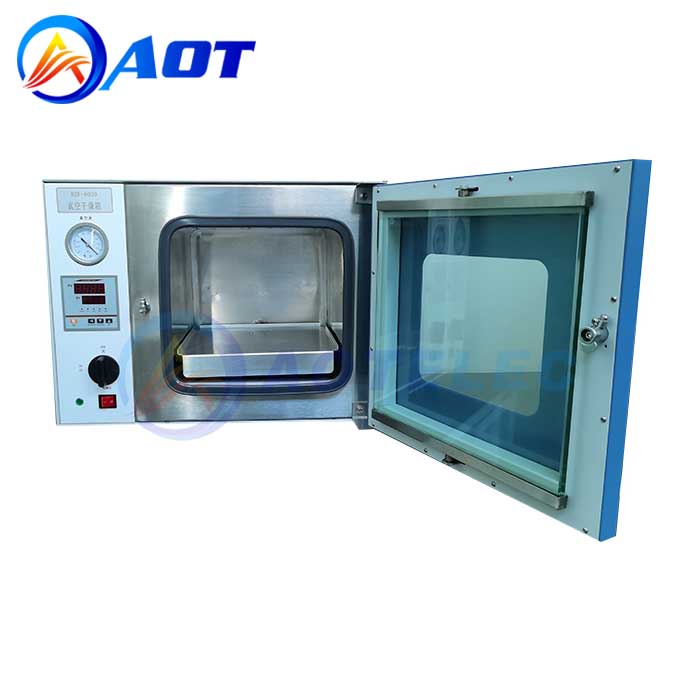
3. Key Comparative Analysis: (1) Core Differences in Main Battery Drying Cabinet Types
Comparison dimension | Vacuum drying oven | Hot air circulation drying oven |
Drying temperature | 40 - 200℃ | 30 - 150℃ |
Vacuum range | -0.01 to -0.098 MPa | Atmospheric pressure |
Precision of moisture removal | ≤10ppm | ≤50ppm |
Drying efficiency | Medium-high (2-4 hours / batch) | Low (6-8 hours / batch) |
Applicable scenarios | Cell, precision electrode sheet | Raw materials, semi-finished products |
Energy consumption level | 15-30KW | 8 - 15 KW |
Core advantage | High precision, no oxidation | Low cost and simple operation |
Core weakness | High cost, batch production | Low precision and prone to oxidation |
4. Frequently Asked Questions
Q: After drying, the electrode sheet shows water rebound. What is the cause and how to solve it?
A: The core reason for water rebound: ① After drying, it was not cooled in a low-humidity environment (workshop humidity > 40% RH); ② The sealing packaging was not completed in time; ③ The equipment had vacuum leakage, resulting in incomplete drying. Solutions: ① Integrate a cooling module in the drying box, maintaining vacuum or filling nitrogen (humidity ≤ 1% RH) during the cooling stage; ② Complete the sealing packaging within 10 minutes after drying; ③ Regularly test the vacuum leakage rate and replace the aging sealing parts (suggested to replace once every 6 months); ④ Control the workshop humidity below 30% RH.
Q: The heating tubes of vacuum drying cabinets are prone to damage. How can we extend their service life?
A: Reasons for heating tube damage: ① Frequent start-stop causing thermal shock; ② Dust adhering to the electrode plates causing local overheating; ③ Unstable voltage. Ways to extend lifespan: ① Use a gradual temperature increase program (with a temperature rise of no more than 5°C per minute) to avoid sudden high temperatures; ② Regularly clean the dust on the heating tube surface (clean once every 500 hours of operation); ③ Equip a voltage stabilizer to ensure voltage fluctuation ≤ ±5%; ④ Choose stainless steel material for the heating tube (resistant to high temperatures and corrosion), avoid using ordinary metal materials.
Q: What is the core difference between laboratory small-sized drying cabinets and industrial large-sized drying cabinets?
A: Core concerns for laboratory models (50-200L): ① Temperature accuracy (uniformity error ≤ ±0.5°C), to meet the accuracy of research data; ② Ease of operation (support multi-segment program setting); ③ Small floor space (≤ 1㎡); ④ Safety (has over-temperature alarm and leakage protection). Core concerns for industrial models (500-1000L): ① Capacity matching (dry ≥ 100kg electrode sheets per hour); ② Continuous operation stability (no faults for 72 hours); ③ Automation level (support production line linkage, remote monitoring); ④ Energy consumption control (unit production capacity energy consumption ≤ 20kw・h / ton).
Q: How to determine if the drying effect of a battery drying cabinet meets the standard? What are the detection methods?
A: Criteria for meeting standards and detection methods: ① Moisture content detection (using a Karl Fischer moisture analyzer, electrode sheets ≤ 50ppm, battery cells ≤ 10ppm); ② Temperature uniformity detection (install 9 temperature measurement points in the chamber, deviation ≤ ±1°C); ③ Electrode sheet performance detection (after drying, adhesion ≥ 1.5N/cm, no warping or oxidation phenomenon); ④ Battery performance detection (capacity deviation ≤ 2%, cycle life ≥ 1500 times).
Q: The energy consumption of the drying cabinet is too high. How to reduce production costs?
A: Cost reduction solutions: ① Use a variable frequency heating system, adjust power according to the drying stage (full power during heating stage, 60% power during insulation stage); ② Choose polyurethane insulation layer (thickness ≥ 80mm), reducing heat loss; ③ Reasonably plan production batches to avoid equipment idle operation; ④ Use peak-valley electricity prices to conduct drying operations during low-demand periods; ⑤ Regularly clean the equipment's heat dissipation system to ensure heating efficiency.
Q: The conveyor belt of the tunnel-type drying cabinet is prone to deviation. What are the reasons and how to adjust?
A: Deviation reasons: ① Uneven conveyor belt tension; ② Parallelism deviation of the rollers; ③ Asymmetrical placement of materials. Adjustment plan: ① Use tension adjustment bolts to make the tension on both sides of the conveyor belt consistent; ② Correct the parallelism of the rollers (deviation ≤ 0.5mm); ③ Ensure that the materials are evenly placed on the center of the conveyor belt (left and right deviation ≤ 5cm); ④ Install deviation detection sensors to automatically adjust the position of the conveyor belt.
Q: How to ensure the drying effect of the drying cabinet in high-humidity areas (such as the rainy season in southern regions)?
A: Solutions: ① Install a dehumidification device at the inlet of the drying cabinet to control the inlet humidity below 10% RH; ② Increase the drying temperature (increase by 10-20°C compared to the conventional temperature), extend the drying time by 10-15%; ③ Use "vacuum + nitrogen protection" dual mode, fill nitrogen after drying to prevent moisture from re-adsorbing; ④ Strengthen the workshop's dehumidification (equip industrial dehumidifiers, workshop humidity ≤ 30% RH); ⑤ Regularly check the equipment's sealing performance to prevent external moisture from penetrating.
The Battery Drying Oven, as a key equipment in battery production, its drying accuracy, stability and efficiency directly affect the core competitiveness of battery products. When enterprises select the equipment, they need to consider their product types (cylindrical / square / pouch), production scale (laboratory / medium batch / large scale), process requirements (water content accuracy, drying time), and compliance requirements of the target market. Through multi-dimensional comparison of equipment types and supplier capabilities, they should choose a cost-effective solution.
Contact: Lika
Phone: +86-19906035385
Tel: 0086-592-7161550
Email: sales@aotbattery.com
Add: No.168, Zhaogang Road, Xiamen City, China
 1173116801
 sales@aotbattery.com