
Home > News
1.What are coin cell cases? (Core product definition)
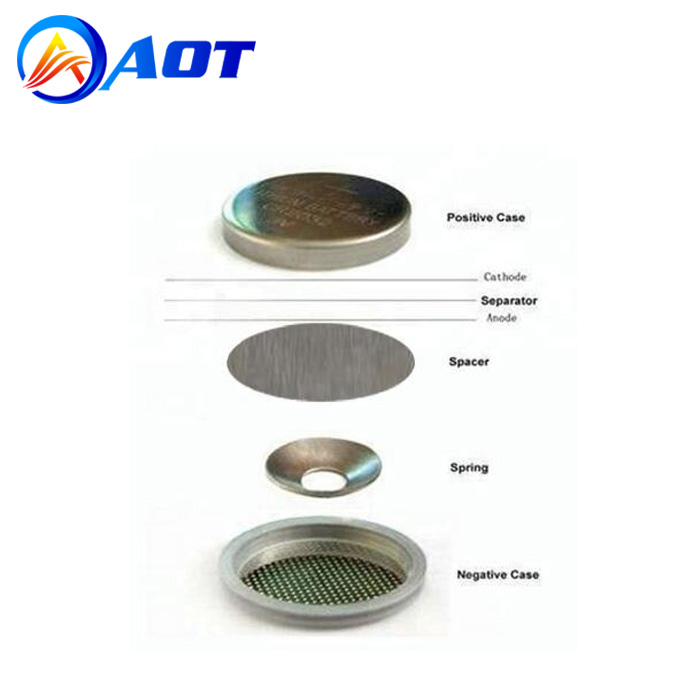
Coin cell cases are the outer shell components of button batteries, serving as the "protective and sealing carrier" for the battery, directly influencing its safety, sealing performance, service life and applicable scenarios. Their core components include: the top cover, the bottom cover (the main body of the shell), the sealing gasket (to prevent leakage), and the conductive tabs (to ensure contact). Common models are classified by size (such as CR2032, CR2025, CR1632, etc.), with the main materials being stainless steel (304/316) and plastic. They are widely used in laboratory research, smart wearables, industrial sensors, medical equipment and other fields.
2. Scenario-based Witnessing: The Hardcore Performance of Coin Cell Cases
The value of high-quality coin cell cases is always reflected in the stable output under specific application scenarios. The following three core scenarios' test data visually demonstrate the gap between professional products and ordinary ones:
Laboratory research and development scenario: In the argon gas glove box of the new energy materials laboratory, using a CR2032 type battery case made of 316 stainless steel, after 500 charge-discharge cycle tests, the sealing gasket did not deform, the electrolyte did not leak, and the battery capacity retention rate still reached 92% of the initial value. While the ordinary carbon steel battery case showed corrosion spots after 150 cycles, causing distorted test data.
Smart wearable device scenario: A certain brand's smart bracelet equipped with a wave-shaped spring clip design for the button battery case, operated continuously for 365 days without power failure, with the contact resistance of the spring clip remaining within 0.02Ω. This design solved the pain point of traditional snap-type battery cases being prone to loosening in motion scenarios, and was suitable for high-frequency mobile devices such as smartwatches and Bluetooth headphones.
Industrial sensor scenario: For the coin cell cases used in temperature sensors for cold chain logistics, they worked continuously in an 85% humidity cold storage environment for 18 months. The 304 stainless steel shell did not rust, and the sealing structure effectively prevented condensation water from invading, ensuring that the data transmission accuracy of the sensor reached 99.8%. In contrast, the plastic battery case cracked due to moisture penetration after 3 months.
3. In-depth Comparison: The Core Decision Logic for Selecting the Right Coin Cell Cases
(1) Material Comparison: 304 Stainless Steel vs 316 Stainless Steel vs Plastic
Material type | Core advantages | Applicable scenarios | Limitations |
304 Stainless Steel | Moderate cost, basic corrosion resistance | Consumer electronics, ordinary sensors | Salt spray resistance is average. |
316 Stainless Steel | Strong corrosion resistance and excellent sealing performance | Laboratory research and development, outdoor equipment | The price is 30% higher than 304. |
Plastic (PP) | Lightweight, low cost | One-time use electronic devices, low-power products | Resistant to temperature variations and prone to aging |
4. Frequently Asked Questions: Overcoming Challenges in Purchasing Coin Cell Cases
(1) Why do coin cell cases tend to leak?
The main reasons are as follows: ① Inappropriate material selection (such as using ordinary carbon steel in a high-humidity environment); ② Incompatible sealing gasket material (not using PP material resistant to electrolyte); ③ Unqualified pressing process (insufficient pressure resulting in gaps). Solution: Prioritize the combination of 316 stainless steel and PP gasket to ensure the external height is controlled at around 3.0mm (for CR2032 model), and dry the shell with a 30℃ oven for 4 hours before assembly.
(2) How to avoid damaging the battery case during welding?
Improper welding operations can cause the shell to overheat and the gasket to melt, thereby affecting the sealing performance. Correct procedure: ① Remove the battery case terminals or take the case off the bracket to avoid direct contact of the soldering iron with the body; ② When using a hot air gun, remove the battery first and control the welding time within 10 seconds; ③ Choose a heat-resistant battery case (such as the high-temperature series of the CDA brand). Do not directly weld the battery case body, as it will cause permanent structural damage.
(3) Can different types of coin cell cases be used interchangeably?
No, they cannot. The core difference lies in the size specifications: CR2032 (20mm × 3.2mm), CR2025 (20mm × 2.5mm), CR1632 (16mm × 3.2mm), etc. have specific diameters and heights, and the matching tolerance of the shell and the battery needs to be controlled within ±0.1mm. Mixing different types of cases will lead to poor contact, inability to seal properly, and even damage to the battery or the equipment.
(4) How to solve moisture-related faults of coin cell cases?
Moisture is the main cause of battery failure in laboratory scenarios. The solutions include: ① Choose a four-piece structure with excellent sealing performance (cover, base, gasket, spring); ② Complete assembly within 1 hour after unsealing to avoid absorbing moisture from the air; ③ Perform vacuum degassing treatment in a glove box before assembly; ④ Keep the storage environment humidity below 40%. A laboratory achieved a 99% reduction in moisture-induced faults by implementing this solution, from 32% to 1.5%.
Contact: Lika
Phone: +86-19906035385
Tel: 0086-592-7161550
Email: sales@aotbattery.com
Add: No.168, Zhaogang Road, Xiamen City, China
 1173116801
 sales@aotbattery.com