
Home > News
1. What is a Battery Vacuum Mixer?
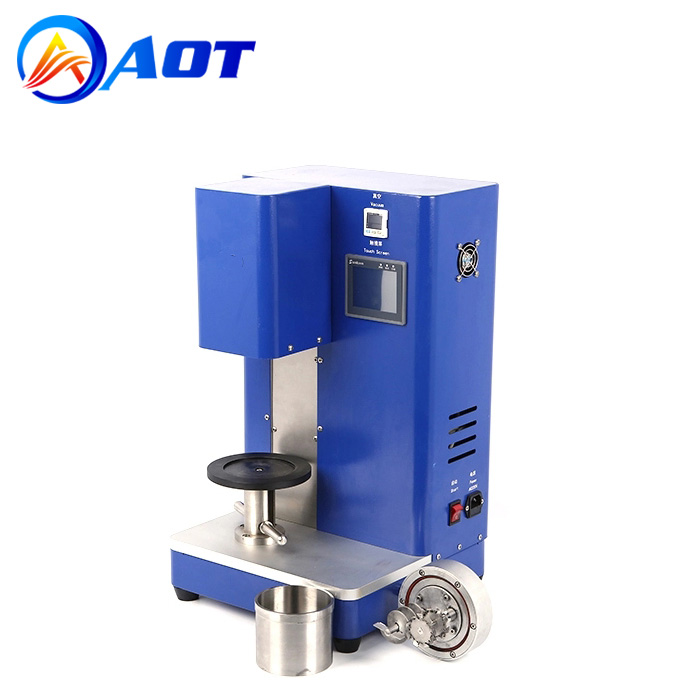
Battery vacuum mixer is a specialized industrial mixing equipment designed specifically for preparing lithium battery electrode slurries. Equipped with a dual planetary stirring system combined with high-speed dispersion, it operates under a closed negative-pressure vacuum environment to uniformly blend conductive agents, binders, active materials, and solvents into consistent battery slurry. It serves as a core upstream device prior to the coating process in lithium battery manufacturing.
2. Functions of a Battery Vacuum Mixer
(1) Uniform Dispersion: Fully disperses active materials, conductive carbon powders, and binders to prevent agglomeration, ensuring consistent slurry composition and reducing variations in internal resistance among finished cells.
(2) Vacuum Deaeration: Removes microbubbles generated during mixing under negative pressure, preventing defects such as pinholes, dimples, and poor adhesion during electrode coating, thereby lowering the risk of thermal runaway.
(3) Temperature-Controlled Mixing: Integrated jacketed temperature control system maintains stable slurry temperature during mixing, preventing binder gelation or solvent abnormal evaporation due to overheating.
(4) Closed-System Oxidation Protection and Solvent Recovery: The sealed vacuum chamber can be paired with a condenser to recover NMP solvent; optional inert gas inlet provides oxygen isolation for oxidation-sensitive materials like silicon-carbon anodes.
(5) Batch Process Recording: Records parameters such as vacuum level, stirring speed, temperature, torque, and mixing duration, enabling quality traceability and meeting audit requirements from power battery and energy storage customers.
3. Real-World Application Scenarios
(1) Laboratory R&D (0.5L–5L): Universities, material research institutes, and cell developers use this equipment to formulate new recipes for silicon-carbon anodes and solid-state electrolyte slurries. Ideal for small-batch, frequent sampling and material changeovers; equipped with quick-release impellers that record speed, vacuum, and temperature profiles per batch, supporting segmented dry/wet mixing programs. Inadequate vacuum stability leads to microbubbles causing defects in pilot-scale coating, misleading formulation evaluation.
(2) Pilot Production Line (10L–60L): Cell manufacturers scale up formulations to small-batch trial production, integrating with coating machines. Requires stable multi-batch operation, controlled solvent evaporation, and reduced slurry color variation and internal resistance deviation. Many low-cost models experience seal aging and pressure drop after 5–8 consecutive batches, gradually reducing yield.
(3) Mass Production for Power Batteries (100L–1000L): Used for large-scale production of LiFePO₄ energy storage batteries and passenger vehicle power battery cathode slurries—high solids content and high viscosity require robust torque, heat dissipation, and explosion-proof performance. Incomplete vacuum deaeration increases risks of electrode pinholes and cell thermal runaway. Production-grade models integrate with MES systems to automatically save all process parameters for auditing and traceability.
4. Comparative Analysis: Distinguishing High-Quality Battery Vacuum Mixers from Ordinary Models
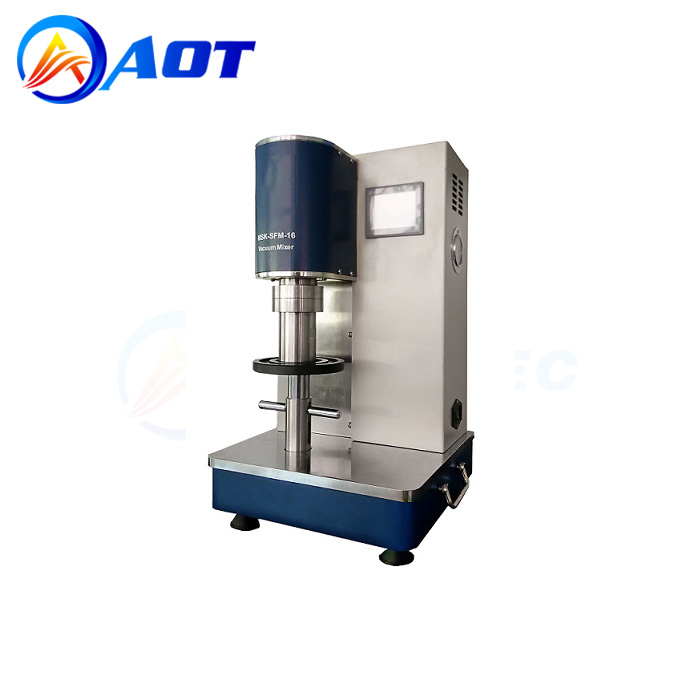
Customers typically compare multiple options before purchasing. Below is a comparison between simple vacuum mixers and dual-planetary vacuum mixers, as well as low-cost versus industrial-grade models.
Comparison 1: Simple Vacuum Mixer vs. Dual-Planetary Vacuum Mixer
Simple Vacuum Mixer: Single-shaft stirring with basic vacuum function only. Poor dispersion capability; high-viscosity slurries tend to agglomerate and develop dead zones. Suitable only for low-viscosity auxiliaries, not for main slurries like LiFePO₄ or silicon-carbon anodes. Slow evacuation speed and unstable pressure retention. Low cost, suitable only for simple pre-mixing.
Dual-Planetary Vacuum Mixer: Combines orbital motion, self-rotation, and high-speed dispersion discs for strong shear and dispersion. Vacuum system includes water-cooled condensers to prevent solvent ingress into the vacuum pump. Jacketed temperature control accommodates wide viscosity ranges. Multiple mechanical seals resist solvent corrosion, ensuring long-term continuous operation with stable vacuum performance—the standard configuration for major cell manufacturers’ anode and cathode slurries.
Comparison 2: Low-Cost Models vs. Industrial-Grade Battery Vacuum Mixers
Vacuum Pressure Holding Performance:
Low-cost models: Can only reach -0.09 MPa; vacuum drops noticeably after 30 minutes of static holding. Standard skeleton seals corrode and leak after 1–3 months of solvent exposure. Industrial version: maintains stable pressure at -0.098 MPa, with minimal pressure drop over 24 hours of static holding; features a composite sealing structure resistant to NMP solvents, suitable for lithium battery slurry conditions, reducing maintenance frequency.
Temperature control and torque output
Low-cost model: basic heating only, no material temperature sensor, resulting in uneven heating and localized overheating or gelling of high-viscosity slurries.
Industrial version: water circulation / thermal oil jacket temperature control, real-time material temperature monitoring with ±1℃ accuracy; real-time torque monitoring and overload protection prevent clogging by high-viscosity slurries such as silicon-carbon mixtures.
5.FAQ
Q1: Why are there still bubbles in the slurry after vacuum mixing?
Four common reasons: ① Insufficient vacuum level or sealing leakage, failing to achieve the required negative pressure; ② Improper timing of vacuum application—once slurry viscosity increases, bubbles become difficult to remove; ③ Absence of a condenser, causing solvent evaporation that disrupts the vacuum environment; ④ Inappropriate speed settings, with high-speed dispersion continuously drawing in new air. Recommended process sequence: dry powder mixing → low-speed wet mixing and wetting → staged stepwise vacuum degassing.
Q2: How to select the volume of a vacuum mixer for lithium battery production?
Laboratory scale: 0.5–5L; pilot line: 10–60L; mass production line: 100L and above. Selection principles: Slurry fill factor should generally be maintained at 40%–60% of the tank’s effective volume—overfilling reduces degassing efficiency. Reserve space for future expansion, and prioritize confirming tank material (industry standard for lithium batteries is 316L stainless steel).
Q3: What is the service life of mechanical seals in vacuum mixers?
Under normal operation with NMP-based or aqueous slurries, high-quality solvent-resistant seals typically require maintenance every 6–12 months. Ordinary oil seals swell rapidly when exposed to NMP and fail quickly. Seals are consumable parts; reliable suppliers provide dedicated spare parts kits and online replacement guidance, rather than offering vague whole-machine warranties.
Q4: Can a single vacuum mixer be used for both aqueous anode slurries and NMP cathode slurries?
Yes, it can be shared, but strict cleaning is essential to prevent NMP residue from contaminating aqueous formulations. For long-term, large-scale simultaneous production of both types of slurries, industry best practice recommends using separate equipment to avoid cross-contamination and reduce batch failure rates.
Q5: What is the typical mixing cycle time for lithium iron phosphate cathode slurry in a vacuum mixer?
Dry powder mixing: 3–8 minutes; wet dispersion + vacuum degassing: 15–30 minutes, adjusted based on solid content and slurry viscosity. Higher dispersion efficiency results in shorter mixing cycles for equivalent uniformity and higher per-batch output.
Battery vacuum mixers are not standardized, off-the-shelf mixing equipment. Key performance indicators—vacuum stability, solvent-resistant sealing capability, slurry homogeneity, temperature control precision, and data traceability—are what determine whether a machine can reliably operate on lithium battery slurry production lines, not just tank size and price.
Contact: Lika
Phone: +86-19906035385
Tel: 0086-592-7161550
Email: sales@aotbattery.com
Add: No.168, Zhaogang Road, Xiamen City, China
 1173116801
 sales@aotbattery.com