
Home > News
In the lithium battery manufacturing supply chain, cell consistency directly determines the cycle life, safety performance, and energy conversion efficiency of battery packs. As a core equipment for ensuring cell uniformity, battery sorters automatically detect key parameters such as open-circuit voltage, AC internal resistance, and capacity, grouping cells with similar characteristics into the same batch. They serve as a critical quality control device throughout the entire lifecycle—from cell manufacturing and pack assembly to second-life recycling.
1. Core Role and Industry Impact
Battery sorters are not merely auxiliary inspection tools; they are pivotal devices that define the upper limit of lithium battery quality and the overall standard of industry development. Their impact spans four dimensions:
(1)Setting Performance Ceiling and Safeguarding Safety & Lifespan Baseline
The overall performance of series-parallel battery packs is determined by the weakest individual cell. Parameter deviations can lead to uneven charging/discharging and abnormal heat generation—minor cases accelerate capacity degradation, while severe ones may trigger thermal runaway. By enabling high-precision detection and grading, battery sorters eliminate physical differences among cells. High-precision sorted power battery packs achieve over 20% longer cycle life, reduce energy loss during charge/discharge by 15%, and lower system failure rates by 30%, fundamentally securing both performance and safety benchmarks.
(2)Transforming Manufacturing Models: Enhancing Efficiency, Reducing Costs, and Improving Quality
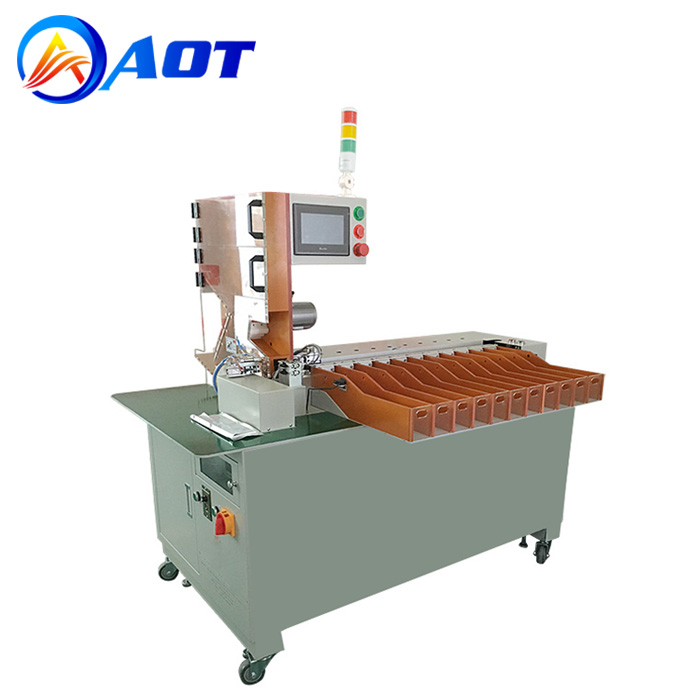
Fully automated sorters process 600–1,200 cells per hour per channel—over 20 times faster than manual sorting. A single sorting line can replace 15–20 workers, significantly reducing labor costs. Meanwhile, high-precision automatic sorting keeps parameter deviations within ±0.5%, achieving a defect detection rate exceeding 99.5%. This drives production yield from 95% up to 99.5%, minimizing raw material waste and rework expenses.
2. Typical Application Scenarios and Measured Performance
In power battery module manufacturing, at a factory producing 200,000 cells daily, a four-channel simultaneous testing sorter operates continuously for 72 hours in a 45°C workshop. It achieves an internal resistance measurement accuracy of ±0.01mΩ and voltage accuracy of ±0.01mV for 18650 cylindrical cells, keeping batch-to-batch parameter variation under ±0.5%. This directly increases the assembled battery pack’s cycle life by over 20% and effectively reduces premature capacity fade and thermal runaway risks caused by individual cell differences.
In large-scale energy storage applications, for lithium iron phosphate (LFP) cells used in photovoltaic storage systems, the sorter strictly controls voltage differences between grouped cells to ≤10mV. In a 100MWh grid-scale energy storage project, sorted battery packs reduced system energy loss by 15% during charge/discharge cycles and improved operational stability by 30%, extending the overall service life of the storage system from the standard 8 years to over 10 years.
In battery recycling and second-life utilization scenarios, sorters perform secondary grading on retired power battery cells, selecting those with remaining capacities of 70%–80% for use in low-speed vehicles and home energy storage. A single sorter processes 2,400 cells per hour—20 times more efficient than manual sorting—greatly enhancing the economic value of battery recycling.
3.Comparative Analysis: Key Differences Between Premium and Standard Battery Sorters
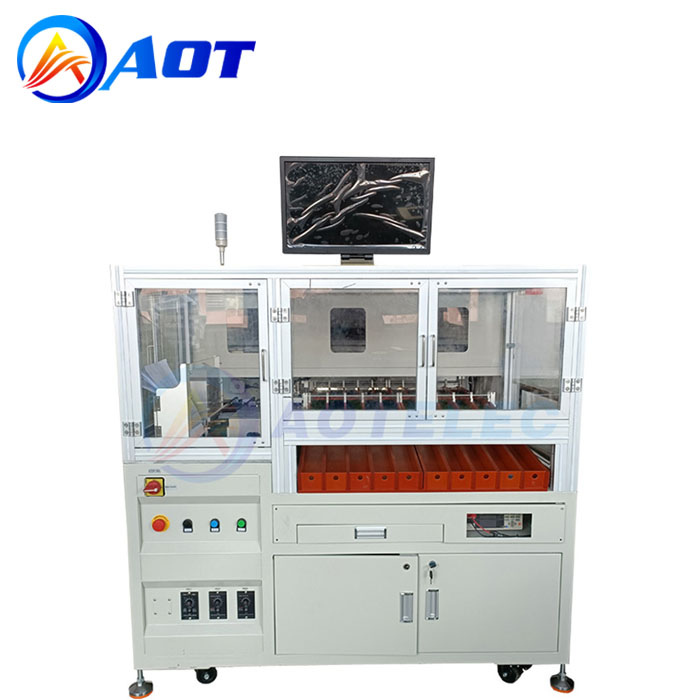
In core performance, premium sorters offer voltage measurement accuracy up to ±0.01% of reading, with a resolution of 0.01mV and internal resistance accuracy of ±0.01mΩ. In contrast, standard low-cost models typically achieve only ±0.5% voltage accuracy, 1mV resolution, and ±0.5mΩ internal resistance accuracy—the precision gap reaches 50 times. In terms of operational stability, high-quality equipment can run continuously for 72 hours without data drift, whereas standard equipment begins to show accuracy deviations after just 8 hours. Regarding sorting efficiency, premium devices consistently maintain a processing speed of 70–120 PPM, while ordinary models achieve only 40–60 PPM with significant fluctuations. Additionally, high-end equipment features independent channel design, ensuring that a single channel failure does not affect overall system operation; in contrast, a single channel failure in standard equipment causes complete shutdown.
To identify reliable suppliers, consider four key dimensions: First, verify core component specifications—high-quality equipment uses imported probe brands and high-precision data acquisition cards, so request specific brand and model details from suppliers for verification. Second, validate real-world application cases—reliable suppliers should have proven projects with leading battery manufacturers or energy storage systems; be cautious with those offering only theoretical claims. Third, evaluate after-sales service capabilities—top-tier suppliers provide on-site installation and training, regular maintenance visits, and 48-hour on-site response for faults. Fourth, assess software algorithm performance—premium equipment supports dynamic grading functions, automatically optimizing grouping strategies based on cell parameter distributions to maximize yield.
4.FAQ
Q1: Why do inspection probes on sorting machines easily get damaged, and how can their lifespan be extended?
Probe damage mainly results from daily high-frequency contact with over 100,000 battery cells, improper contact pressure, or dust accumulation. To extend probe life, clean the surface oxidation layer daily, calibrate contact pressure monthly to the 5–20N range, replace worn probes every six months, and regularly remove internal dust from the equipment.
Q2: Can overly narrow sorting threshold settings reduce yield?
How can consistency and yield be balanced? There is no need to blindly tighten thresholds. Instead, use the machine’s dynamic grading function to analyze the distribution patterns of cell parameters, and adopt a dual-parameter classification based on “voltage + internal resistance” instead of single-parameter sorting. If narrow thresholds are still required, adjust upstream formation process parameters based on equipment feedback to improve cell consistency at the source.
Q3: Can sorting machines be universally used for cylindrical, prismatic, and pouch cells?
They cannot be directly interchangeable. Cylindrical cells require roller conveyance and round probes for contact, while prismatic and pouch cells need fixture positioning and flat probes. However, modularly designed sorters can adapt to different cell types by replacing loading fixtures and test probe assemblies. When purchasing, confirm the equipment’s compatibility and scalability with your supplier.
Q4: At what daily production volume does an automatic sorting machine become cost-effective?
In most production scenarios, the break-even point is approximately 500–700 cells per day. Below this volume, manual sorting is cheaper; above 1,000 cells per day, automated sorting delivers measurable economic benefits through labor savings and improved yield, enabling most users to recover their equipment investment within 12–18 months.
Battery sorting machines are critical devices that determine the final quality and lifespan of battery products. Their value lies not only in basic detection and grading functions but also in their deeper impact on production efficiency, product value, and industrial development.
Contact: Lika
Phone: +86-19906035385
Tel: 0086-592-7161550
Email: sales@aotbattery.com
Add: No.168, Zhaogang Road, Xiamen City, China
 1173116801
 sales@aotbattery.com