
Home > News
In numerous fields such as new energy vehicles, energy storage stations, industrial equipment, and consumer electronics, batteries serve as the core power component. The battery's health status, capacity accuracy, and internal resistance stability directly determine equipment operational safety and service life. Most enterprise operations and procurement personnel frequently face challenges including inaccurate battery testing data, misjudgment of aging batteries, frequent equipment shutdowns, and low testing efficiency.
1. Practical Applications Across Multiple Scenarios, Meeting Demands in Harsh Conditions
Many buyers know only that battery testers can measure battery data but fail to understand the true value of these devices in different application scenarios. Generic product descriptions that simply state "high precision" or "stable performance" do not reflect the actual advantages. In contrast, the performance benefits of professional battery testers are clearly validated under real-world, demanding operating conditions.
In new energy vehicle maintenance scenarios, high summer temperatures in garages and low winter temperatures outdoors are typical environments for battery testing. Ordinary testers often suffer from data drift and measurement deviations exceeding 0.5V at -20°C or 60°C, making it impossible to accurately assess the CCA (Cold Cranking Ampere) performance of automotive starting batteries, AGM, or GEL batteries. Our battery tester, however, operates continuously for 72 hours across a wide temperature range of -20°C to 60°C, maintaining voltage measurement error within ±0.01V and achieving a CCA detection accuracy of ±1%. It precisely identifies hidden faults such as battery sulfation, capacity degradation, and abnormal internal resistance, preventing unexpected engine stalls or failed starts.
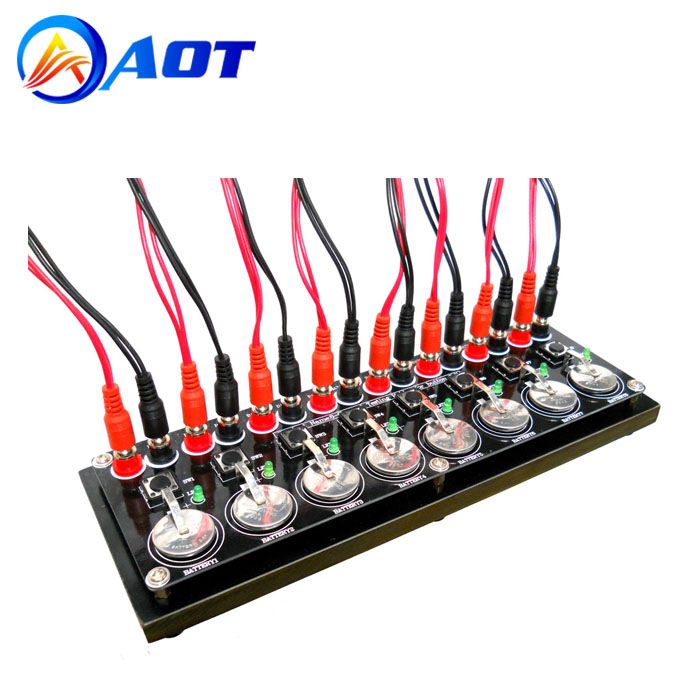
In industrial energy storage station operations, battery banks operate under continuous full-load cycles. Aging individual cells or imbalanced internal resistance can lead to reduced overall efficiency and increased risks of overheating and fire. Manual, cell-by-cell inspection is highly inefficient, while traditional equipment typically tests only one battery group at a time. This battery tester supports all common voltages—6V, 12V, and 24V—and is compatible with mainstream battery types including lead-acid, lithium-ion, and LiFePO4. It enables simultaneous multi-parameter testing—including voltage, internal resistance, capacity, and discharge rate—with no lag or data corruption even after consecutively testing 500 battery groups. Accuracy remains above 99.8%, perfectly meeting the needs of batch inspections and regular quality checks in large-scale energy storage facilities.
In factory-level battery quality control, high-frequency production line testing demands exceptional device stability and speed. Conventional capacity testers require several hours to complete a full charge-discharge cycle per battery, severely slowing down production. Our device employs four-terminal Kelvin sensing technology to eliminate wire resistance interference, delivering precise test reports in just three seconds. It supports capacity ranges from 2–120Ah and CCA measurements from 100–3000, fully satisfying stringent requirements for battery grading, defect screening, and traceability in manufacturing.
2. Professional Comparative Analysis: Understanding Key Differences Between High-Quality Battery Testers
When purchasing battery testers, customers inevitably compare multiple products, struggling to distinguish between basic and professional models, or between conductance-based and capacity-based devices. Conducting clear, targeted comparisons highlights the technical superiority and cost-effectiveness of professional solutions, enabling faster, more informed decision-making.
(1)Basic Entry-Level Tester vs. Professional Battery Tester
Low-cost, entry-level battery testers on the market typically measure only basic voltage levels and cannot detect internal resistance, true capacity, or CCA values. They are highly susceptible to environmental temperature fluctuations and connection resistance. Many users report that although their batteries appear normal in voltage readings, equipment still experiences frequent failures once installed—the root cause being the inability to detect latent battery aging. In contrast, our professional battery tester provides in-depth analysis of battery health (SOH), state of charge (SOC), internal resistance degradation, and fault codes. It accurately distinguishes between batteries with normal voltage but degraded capacity, effectively eliminating operational risks at the source.
(2)Traditional Capacity Tester vs. Conductance-Based Professional Tester
Traditional capacity testers rely on full discharge and recharge cycles to measure battery capacity, offering high accuracy but requiring extremely long testing times—up to 1–3 hours per battery. This makes them suitable only for laboratory spot checks and unsuitable for batch operations. In contrast, the new conductance-based battery tester eliminates the need for charging and discharging waits, completing tests in just seconds. It combines high precision with exceptional efficiency, features lower power consumption, and a reduced failure rate, making it ideal for industrial maintenance, mass quality inspection, field inspections, and other diverse applications. Its overall operating cost is significantly lower than that of traditional equipment.
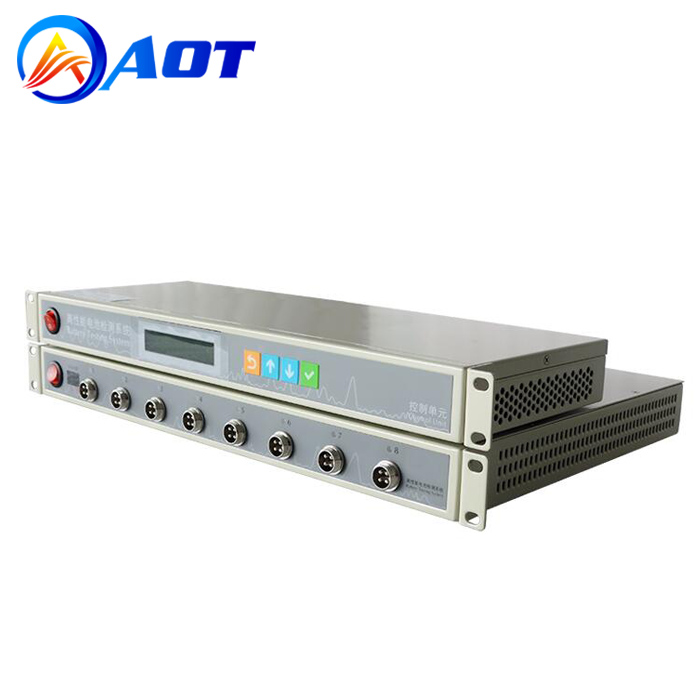
(3)Key Differences Between Premium Supplier Products and Generic Brands
Generic battery testers commonly suffer from exaggerated specifications, severe temperature drift, and lack of protective mechanisms, often leading to data inaccuracies or device damage over time. In contrast, high-quality, certified products offer three core advantages: first, they use industrial-grade chips, ensuring superior stability across wide temperature ranges and enabling continuous operation without failure; second, they come equipped with built-in overvoltage, overcurrent, and overload protection, eliminating risks such as battery short circuits or equipment burnout during testing; third, they support multiple international standards, including JIS, EN, DIN, SAE, and GB, meeting both domestic and export-oriented testing requirements.
3.FAQ
By integrating frequent inquiries from exhibitions, emails, and offline consultations, we have compiled the industry's most pressing core questions, providing precise solutions to customers' procurement, usage, and compatibility challenges, while also addressing key SEO search needs.
(1)Can a battery tester be used for both lithium-ion and lead-acid batteries?
Professional-grade battery testers support all types of batteries—including lead-acid, AGM, GEL, EFB, and LiFePO4—covering mainstream voltage specifications of 6V, 12V, and 24V. Whether it’s automotive starting batteries, energy storage lithium batteries, or small device batteries, one device suffices across multiple applications without requiring replacement, meeting diverse testing requirements in various scenarios.
(2)Why does my device still fail to operate properly even though the battery test shows normal voltage?
Voltage is merely a basic reference value and cannot reflect the true health status of a battery. Many aged or sulfated batteries may show acceptable voltage readings but suffer significantly increased internal resistance, severe capacity degradation, and poor load-carrying capability. When installed, this leads to unstable power supply and equipment shutdowns. Professional testers accurately measure internal resistance, actual capacity, and State of Health (SOH), helping avoid risks caused by misleading voltage readings.
(3)Does extreme outdoor temperature affect testing accuracy?
Ordinary devices are highly sensitive to temperature fluctuations, often resulting in data drift under large temperature differences. This model features built-in temperature compensation algorithms, maintaining measurement errors within an exceptionally tight range even under extreme conditions from -20°C to 60°C, ensuring stable performance during outdoor inspections and high-temperature workshop operations.
(4)How do I choose the right battery tester for my working conditions?
For individual auto repair or small-scale maintenance tasks, a portable model offers excellent cost-effectiveness with essential testing functions. For factory quality control or bulk inspections at energy storage stations, industrial-grade models are recommended—they support continuous high-frequency testing, data storage and export, and multi-standard compatibility, meeting demands for high precision and efficiency.
The true value of a battery tester lies not in basic data display, but in its ability to deliver accurate, stable measurements under harsh conditions, detect hidden faults early, and effectively reduce operational costs. Compared to standard commercial devices, professional battery testers stand out with their wide-temperature stability, high-precision detection, full battery compatibility, and efficient operation, making them ideal for automotive repair, energy storage stations, battery manufacturing, and industrial equipment maintenance across industries. Backed by international compliance certifications, robust protective mechanisms, and superior parameter accuracy, these testers are the preferred choice for enterprise procurement, export trade, and industrial operations, enabling users to achieve fine-grained battery lifecycle management and minimize equipment failures and operational losses.
Contact: Lika
Phone: +86-19906035385
Tel: 0086-592-7161550
Email: sales@aotbattery.com
Add: No.168, Zhaogang Road, Xiamen City, China
 1173116801
 sales@aotbattery.com