
Home > News
Lithium nickel manganese cobalt oxide, widely abbreviated as NMC (also written as NCM), is one of the most dominant layered cathode materials for modern lithium-ion batteries. The three numbers such as 523, 622 and 811 denote the molar ratio of nickel, manganese and cobalt in the crystal structure of LiNiₓMnᵧCo_zO₂. By tuning this stoichiometric ratio, material scientists adjust capacity, energy density, thermal stability, cycle performance and raw material cost. NMC523, NMC622 and NMC811 represent three typical points along the “nickel-increasing” development route of ternary cathodes, each with distinct strengths, inherent trade-offs and targeted application scenarios.
Nickel is the primary contributor to specific capacity, because nickel ions participate in redox reactions to release lithium ions during charging. Cobalt stabilizes the layered crystal lattice and improves electronic conductivity, while manganese serves as a structural pillar to boost thermal stability and reduce material degradation. As nickel proportion rises and cobalt proportion drops from NMC523 to NMC811, energy density increases, but thermal safety and structural robustness gradually decline. This fundamental trade-off governs material selection for battery R&D and mass manufacturing.
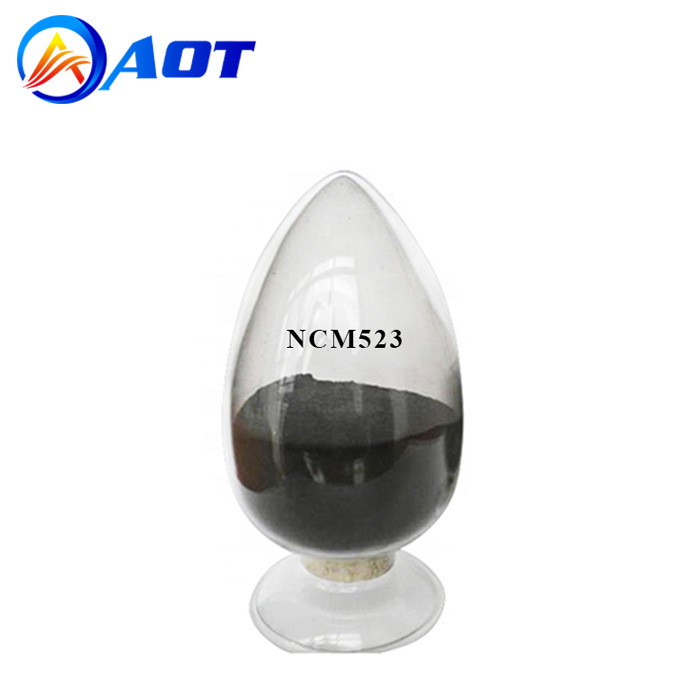
NMC523(LiNi₀.₅Mn₀.₃Co₀.₂O₂) contains 50% nickel, 30% manganese and 20% cobalt. It is the well-balanced baseline among these three grades. Its typical specific capacity reaches approximately 160–170 mAh/g. Thanks to the high manganese fraction, NMC523 exhibits excellent thermal stability and strong resistance against phase transition under high voltage. The risk of oxygen release from the lattice is relatively low, so the onset temperature of thermal runaway is higher than nickel-rich counterparts. This material shows reliable long-cycle performance and low sensitivity to moisture during electrode fabrication. Its moderate cobalt content balances cost and manufacturability. For these reasons, NMC523 has been widely adopted for mid-range electric vehicles, energy storage systems and many laboratory benchmark tests. The main limitation is its relatively lower energy density, which cannot satisfy the demand for ultra-long driving range in premium EVs.
NMC622 (LiNi₀.₆Mn₀.₂Co₀.₂O₂) consists of 60% nickel, 20% manganese and 20% cobalt. It sits in the middle position of the three chemistries. The higher nickel content lifts specific capacity to roughly 180–190 mAh/g, delivering higher energy density than NMC523, while it still retains a reasonable amount of manganese to preserve thermal stability. Compared with NMC523, NMC622 can achieve longer driving mileage without the extreme safety risks of ultra-high-nickel materials. However, cation mixing becomes more noticeable: nickel ions may migrate into lithium sites in the layered lattice, hindering lithium-ion diffusion and causing capacity fading over cycles. In lab coating tests, NMC622 slurries require stricter control over solid content, viscosity and drying temperature to avoid electrode cracking. It has become a mainstream choice for many passenger EV models, representing a mature compromise between high energy, safety and production feasibility.
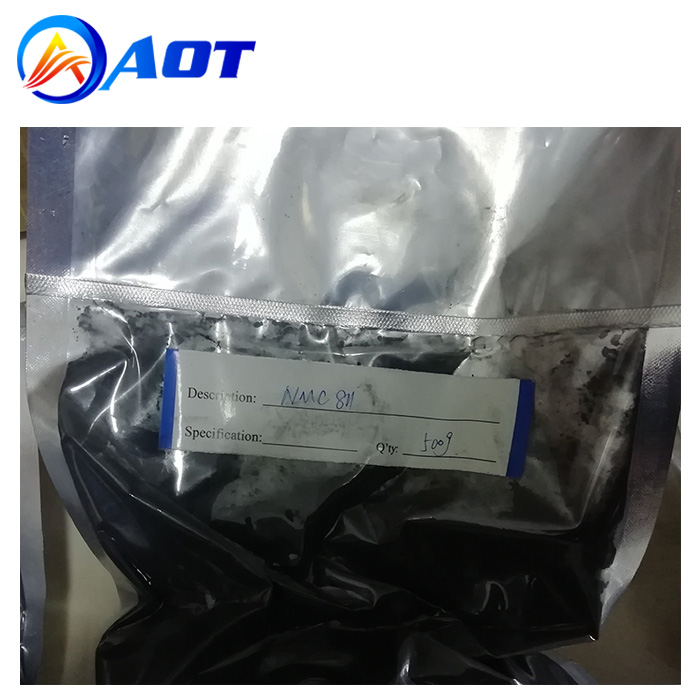
NMC811(LiNi₀.₈Mn₀.₁Co₀.₁O₂) is the nickel-rich variant with 80% nickel, 10% manganese and 10% cobalt. It provides the highest specific capacity of the three materials, up to 200–210 mAh/g, enabling cells to reach energy density above 250 Wh/kg. Reducing cobalt is also economically attractive because cobalt is expensive and its supply chain faces geopolitical constraints. Nevertheless, high nickel brings severe challenges. The layered crystal is much more vulnerable to structural collapse at high states of charge. During overheating, lattice oxygen releases rapidly, accelerating thermal runaway. NMC811 powder is extremely sensitive to ambient moisture and carbon dioxide; hydrolysis easily generates lithium carbonate impurities, which increase impedance and deteriorate electrochemical performance. Therefore, electrode preparation must be operated in low-humidity glove box environments, and surface coating modification (such as Al₂O₃ or ZrO₂ coating) is almost mandatory. Battery packs using NMC811 require sophisticated BMS and advanced thermal management systems to limit charging rate and suppress local hotspots. This chemistry is mainly deployed in high-end long-range electric vehicles, where top energy density is prioritized, accepting higher manufacturing complexity and stricter safety control.
Material modification strategies are actively studied to mitigate the trade-offs of nickel-rich cathodes. Element doping, surface coating, single-crystal synthesis and particle morphology engineering all help restrain cation disorder, suppress side reactions and improve thermal stability for NMC622 and NMC811. Even so, no modification can completely eliminate the fundamental conflict between energy density and thermal safety.
In summary, NMC523 prioritizes stability and cost; NMC622 strikes a balanced sweet spot between energy and safety; NMC811 maximizes specific capacity at the expense of stricter manufacturing and safety requirements. The selection among these three cathode chemistries is never a simple “better or worse” judgment, but a system-level optimization according to target energy density, cycle life, safety specification and production capacity. As battery technology moves forward, continuous refinement of nickel-rich NMC materials will keep pushing the boundary of lithium-ion batteries for electric transportation and renewable energy storage.
Contact: Lika
Phone: +86-19906035385
Tel: 0086-592-7161550
Email: sales@aotbattery.com
Add: No.168, Zhaogang Road, Xiamen City, China
 1173116801
 sales@aotbattery.com