
Home > News
1.What is a battery material mixer? Core function analysis
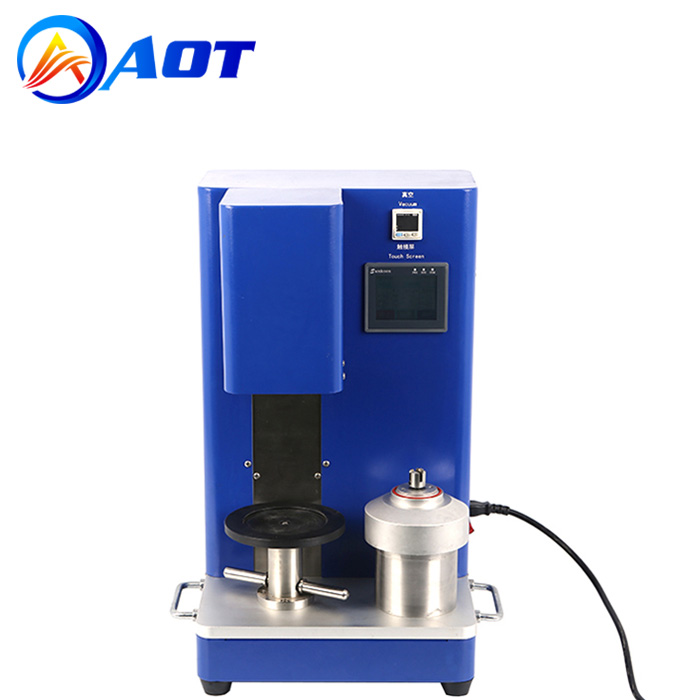
(1) The battery material mixer is a specialized mixing equipment designed for lithium battery positive and negative electrode powders, electrolytes, binders, etc., based on the characteristics of these materials. It adopts vacuum sealing, precise temperature control, and adjustable low/high shear force technologies. Its core difference from ordinary industrial mixers lies in the strict requirements for lithium battery materials - such as "high purity, low impurities, and uniform dispersion". For example, it needs to avoid metal impurities (controlled below 5ppm), prevent sensitive powders from oxidizing and getting damp, and achieve uniform mixing at the microscopic level (particle size distribution coefficient ≤ 5%).
(2) Three core functions: The key link determining battery performance
Uniform dispersion: Break down the agglomeration of powders (such as secondary particles of lithium iron phosphate), enable conductive agents, binders, and active substances to form a three-dimensional network structure, ensure uniform electrode sheet conductivity, and avoid local overheating and short circuits. For example, in the mixing of ternary materials (NCM811), it is necessary to achieve a dispersed particle size of conductive carbon black ≤ 1μm to ensure that the battery energy density reaches above 300Wh/kg.
Defoaming and impurity removal: Through a vacuum environment (pressure ≤ -0.095 Mpa), air bubbles in the slurry are removed, and mechanical wear-generated impurity particles are filtered (filtration accuracy ≥ 5 μm) to avoid problems such as bulging and capacity degradation during battery cycling. Data from a certain battery manufacturing enterprise shows that after using a high-quality mixer, the battery cycling life has increased from 1500 cycles to 2000 cycles.
Process adaptation: Adjusting the stirring parameters according to different material characteristics. For example, for silicon-carbon negative electrodes (volume expansion rate ≥ 200%), low shear force stirring is required to avoid structural damage, while for positive electrode slurry, high shear force is needed to achieve a solid content rate ≥ 75% for high-viscosity mixing, adapting to large-scale coating processes.
2. Scenario-based applications: The core value of the battery material mixer in action
In the production workshop of new energy lithium batteries, the mixer is the "core hub" that deter
mines battery performance - when lithium iron phosphate positive electrode materials and carbon nanotube conductive agents enter the mixing chamber, the equipment needs to operate continuously for 72 hours at a temperature of 120°C and in a vacuum environment of -0.098 Mpa to ensure uniformity of the material mixture with a CV value ≤ 2%, to avoid local poor conductivity during electrode sheet coating; in the preparation of silicon-carbon negative electrode materials, the mixer needs to operate in a low shear force stirring mode to fully blend powders with a hardness close to 6 Mohs and binders, while preventing metal impurities from being generated due to blade wear (controlled below ppm level).
Another typical scenario is the mixing of solid-state battery electrolytes: Sulfide powders are extremely sensitive to oxygen and water, and the mixer needs to have a fully vacuum-sealed structure and be equipped with an inert gas protection system to achieve strict control of oxygen content ≤ 100 ppm and moisture content ≤ 50 ppm during the stirring process.
3. Multi-dimensional comparative analysis: The key logic for selecting the right mixer and supplier
(1) Comparison of mainstream mixer types
Model number | Homogeneity of mixture | Core advantage | Applicable scenario |
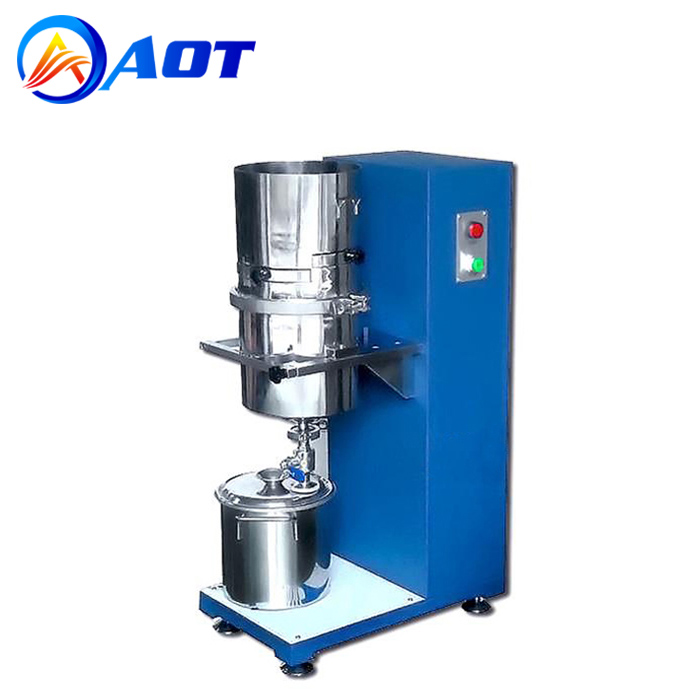
Tilt-type powerful mixer | CV value ≤ 2% | Three-dimensional turbulent flow technology, integrated dry mixing and pulping process | Large-scale preparation of positive and negative electrode pastes |
Double cone mixer | CV value ≤ 1.5% | Low residual rate (≤ 0.05%) and no dead corners. | Small-batch and multi-variety powder blending |
Helical mixer | CV value ≤ 3% | Low shear force, protecting the layered structure of graphite | Negative electrode sensitive material mixture |
Planetary Blender | CV value ≤ 2.5% | Vacuum degassing, temperature control accuracy ±1℃ | Laboratory pilot test / pilot production |
4. Frequently Asked Questions
(1) Why do the blades of the mixer tend to wear out? How to solve it?
The main reason is that lithium battery materials (such as lithium iron phosphate) are high-hardness abrasives with sharp edges. During high-speed stirring, they will continuously scrape the surface of the blades. The solution is as follows: ① Use ceramic particle-enhanced coating (surface hardness ≥ HRC65); ② Select SUS316L material blades and optimize the blade profile; ③ Control the stirring line speed (recommend ≤ 21m/s), avoiding excessive cutting.
(2) Which type of mixer should be selected for high-solid-content slurry (solid content rate ≥ 70%)?
The preferred choice is the inclined high-power mixer or the vacuum planetary mixer (with double-blade offset stirring function). These types of machines use the "screw lift + shear dispersion" combined action to break through the flow limitation of high-viscosity slurry - for example, the blade rotation speed of the inclined high-power mixer can reach 300r/min, combined with a shell heating system (temperature control ±2℃), it can complete the mixing of 75% solid content cathode slurry within 30 minutes, with a uniformity CV value ≤ 1.8%, and no stratification phenomenon. Ordinary spiral blade mixers are prone to causing slurry agglomeration due to insufficient shear force, and cannot meet the requirements of coating processes.
(3) How does the vacuum level of the mixer affect the battery materials?
The vacuum level directly affects the bubble content and moisture control of the slurry: ① When the vacuum level is ≤ -0.09 Mpa, more than 95% of the bubbles can be removed, preventing pinholes from appearing on the electrode sheets after drying; ② A high vacuum environment can inhibit the oxidation of the slurry (especially for negative electrode graphite materials), while reducing water absorption (controlling the slurry moisture content ≤ 0.1%), and reducing the internal side reactions in the battery. If the vacuum level is insufficient (such as only - 0.06 Mpa), the first charge-discharge efficiency of the battery will decrease by 3-5%, and the capacity degradation rate after 500 cycles will increase by more than 10%.
(4) How to balance the energy consumption and production capacity of the mixer?
The key lies in choosing a model with "efficient stirring technology": ① Opt for a variable-frequency motor, which can automatically adjust the speed according to the slurry viscosity, saving 15-20% energy compared to ordinary fixed-frequency motors; ② Select equipment with optimized blade profiles (such as biomimetic spiral blades), reducing energy consumption by 10% while maintaining the same production capacity, and shortening the mixing time by 25%.
Contact: Lika
Phone: +86-19906035385
Tel: 0086-592-7161550
Email: sales@aotbattery.com
Add: No.168, Zhaogang Road, Xiamen City, China
 1173116801
 sales@aotbattery.com