
Home > News
1. What is a powder press?
A powder press is an automated forming device that uses precise high-pressure action to compress loose powders such as metals, ceramics, and magnetic materials into "green parts" (parts in a raw state) with specific shapes and uniform density within the mold cavity. Its core principle is to utilize mechanical, hydraulic, or servo drive systems to provide controllable pressure, allowing the powder particles to form a stable structure through mechanical bonding, laying the foundation for subsequent sintering and processing procedures.
From a technical classification perspective, powder presses can be mainly divided into three categories:
Mechanical press: mainly driven by crankshafts and cams, with high productivity (up to 100 pieces per minute or more), suitable for mass production of standard parts, such as simple-shaped powder metallurgy gears;
Hydraulic press: with stable pressure output and a wide tonnage range (50-1500 tons), suitable for high-pressure forming scenarios, but traditional models have higher energy consumption, and there is still energy consumption even when idle;
Servo direct drive press: integrating the advantages of both mechanical and hydraulic systems, using imported servo motors + ball screw drives, it is currently the mainstream in the high-end market, such as a dedicated model for the iron core of electric vehicle motors.
Scenario-based definition support: In the electric vehicle motor factory, a 1,000-ton servo powder press can operate at high temperature continuously for 72 hours, compressing neodymium-iron-boron magnetic powder into wavy-shaped magnetic steel with an accuracy of ±0.005mm, meeting the concentricity requirements for high-speed motor operation; while in the production of 5G ceramic filters, the powder press needs to use bidirectional pressurization technology to ensure that the density deviation of the ceramic powder billet is ≤±0.1g/cm³, avoiding subsequent cracking during sintering.
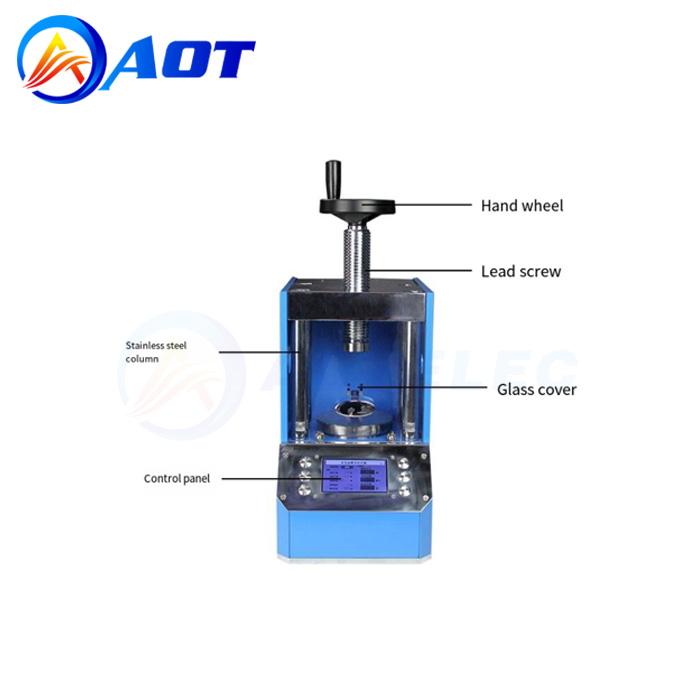
2. The core role of the powder press: The key bridge connecting materials and high-end manufacturing
The core value of the powder press lies in achieving "near-net shaping" - that is, directly obtaining parts with shapes close to the final product through powder pressing, significantly reducing material waste and subsequent processing procedures. Its role can be divided into three dimensions:
(1) Efficient material utilization: The core engine for cost reduction and efficiency improvement
Traditional mechanical processing requires the removal of 30%-50% of raw materials. However, powder presses can achieve a material utilization rate of over 98% by precisely controlling the powder loading and pressing density. For example, in the production of automotive transmission gears, using a powder press only requires fine processing of the gear surface. The single-piece material cost is reduced by 40%, and the yield rate during mass production remains above 99% (the yield rate of traditional methods is approximately 85%).
(2) Complex structure molding: Breaking through the limitations of traditional processes
Powder presses can achieve complex structure molding that is difficult to achieve through traditional casting and machining processes through multi-station linkage and bidirectional pressure application technologies. For instance, in the production of customized dental implants for medical purposes, the titanium alloy powder needs to be pressed into a biomimetic form with a porous structure by a powder press, with the pore diameter and porosity precisely matching the requirements for bone tissue integration in the human body; in the aerospace field, the hollow cooling channels of turbine blades can also be formed in one go through a dedicated powder press, improving the part's high-temperature resistance.
(3) Industry Upgrading Support: Meeting High-End Manufacturing Requirements
With the development of industries such as new energy, 5G, and artificial intelligence, powder presses have become key supporting equipment:
New Energy Vehicles: Each new energy vehicle requires 18-22 powder metallurgy structural components, driving the demand for 1200-1500 high-precision servo presses annually;
Magnetic Materials: The powder forming of ceramic filters for 5G base stations requires a positioning accuracy of ±0.01mm and a repeatability accuracy of ≤0.005mm for the press;
Hard Alloy: The production of tungsten steel blades in the cutting tool industry requires high-density pressing with a 500-ton hydraulic powder press to ensure the cutting hardness meets the standard.
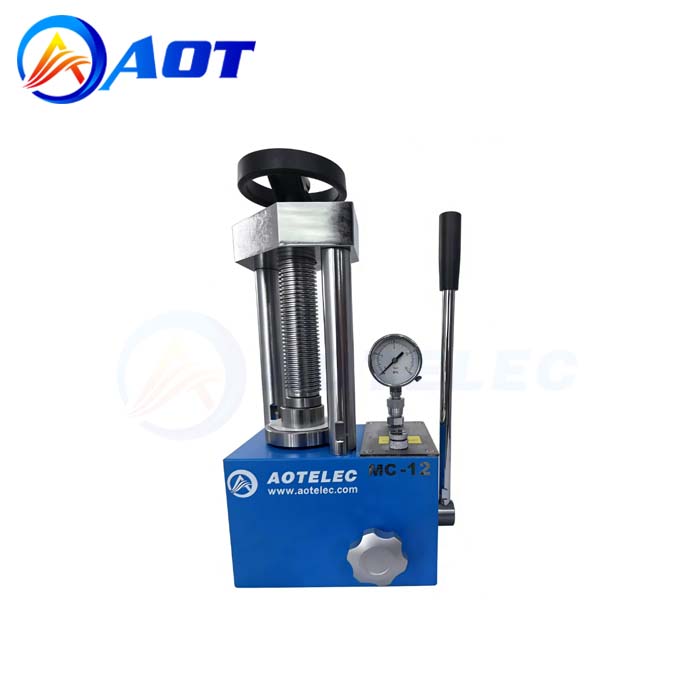
3. Key Technology Comparison: How to Select the Appropriate Powder Press?
Comparison dimension | Traditional hydraulic press | Servo direct drive press machine |
Precision of pressing | ±0.05 mm | ±0.005-0.01mm |
Energy consumption level | The same production capacity consumes 100% of the electricity. | Energy saving by 40%-60% (annual electricity cost savings of 30,000 - 50,000 yuan) |
Model change efficiency | More than 30 minutes | 5 minutes (100 + formula storage) |
Applicable scenarios | Large-tonnage rough-forming (such as large structural components) | High-precision complex components (such as magnetic steel, filters) |
4. Addressing key concerns regarding powder press machine procurement and application
Q: Why do the parts pressed by the powder press machine tend to crack?
A: The main reasons are as follows - ①Poor powde Liquidity (can be improved by adding lubricants); ②Excessive pressing speed (servo press machines can adjust the pressure curve to alleviate the problem); ③Inappropriate demolding method (it is recommended to choose a pull-type with pressure release machine to avoid weak sections being subjected to force).
A: The lifespan of a regular mold is approximately 50,000 to 80,000 cycles. High-quality custom molds (such as those made of high-frequency wear-resistant materials) can last over 120,000 cycles. To extend the lifespan, please note the following: ①Choose a mold material that matches the characteristics of the powder (for example, tungsten carbide for ceramic powder); ② Regularly clean the mold cavity to prevent residual powder from causing wear; ③Control the pressing temperature (high temperatures are likely to cause mold deformation).
Contact: Lika
Phone: +86-19906035385
Tel: 0086-592-7161550
Email: sales@aotbattery.com
Add: No.168, Zhaogang Road, Xiamen City, China
 1173116801
 sales@aotbattery.com