
Home > News
In recent years, the rapid advancement of cutting‑edge industries including nanomaterials, new‑energy materials and advanced ceramics has driven growing demand for refined powder sample preparation at the research level. As a critical upstream link in new‑material R&D, sample grinding directly affects the repeatability of experimental data. Equipment stability, grinding homogeneity and environmental adaptability have become key factors influencing laboratory research efficiency. To address common pain points of conventional ball mills such as high noise, belt slippage, limited operating modes and insufficient reliability during long‑hour runs, a new‑generation oil‑sealed silent planetary ball mill has achieved technical upgrading, delivering a high‑reliability solution for fine grinding and dispersion of powder samples for universities, research institutes and corporate R&D laboratories.
Planetary ball mills realize material comminution, grinding and mixing through planetary motion of grinding jars mounted on a rotating turntable. Intense impact and friction generated by grinding media inside jars reduce raw materials into fine powders, making such equipment indispensable for small‑batch sample preparation, nanomaterial dispersion, new‑product development and pilot‑scale production of high‑tech materials. Traditional planetary ball mills mostly adopt belt‑driving structures. Belts tend to slip after long‑time operation, resulting in fluctuating rotating speed and inconsistent grinding performance. Meanwhile, exposed gear assemblies produce considerable noise and suffer from rapid wear, shortening service life and limiting continuous experimental capacity.
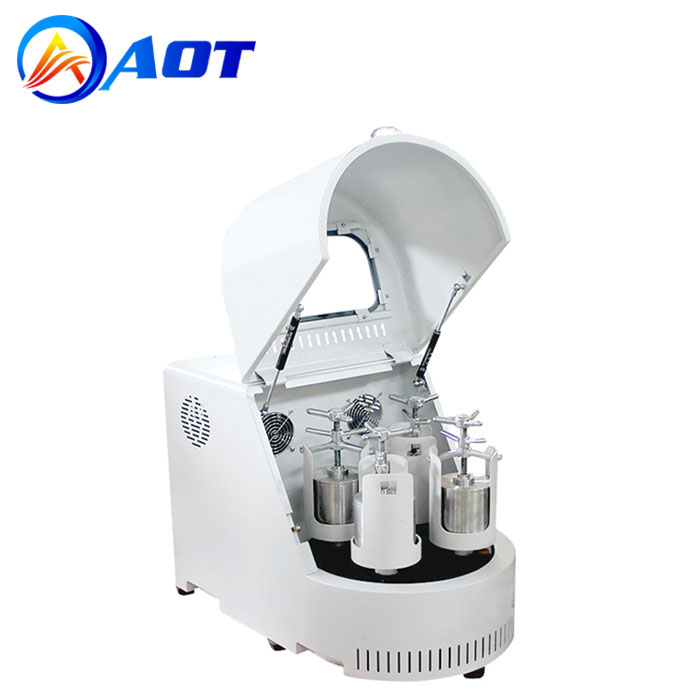
The upgraded equipment adopts patented oil‑sealed silent technology and optimized gear‑driving core solutions. Gears operate inside an oil‑filled chamber, cutting operating noise by 50 % and extending service life by more than twice compared with conventional counterparts. Replacing traditional belt transmission with precision gear drive fundamentally eliminates slippage and unstable speed output, ensuring consistent grinding performance and laying a solid foundation for experimental repeatability. Equipped with a PLC frequency‑conversion control system, the mill integrates undervoltage and overcurrent protection for motor safety, alongside a power‑off memory function. In case of accidental power failure, experiments can resume from previous parameters without resetting, securing continuity of long‑duration tests.
The system supports versatile grinding modes including dry and wet grinding. With optional auxiliary accessories, it can be adapted to vacuum conditions, protective‑atmosphere environments, low‑temperature and high‑temperature grinding scenarios to satisfy diverse experimental requirements. It effectively mitigates material deposition and adhesion inside grinding jars frequently encountered in practical tests. Multiple samples with different formulas or specifications can be processed within one single run, greatly improving researchers’ working efficiency. The minimum achievable particle size of output powder reaches 0.1 μm, meeting preparation requirements for nanoscale materials while guaranteeing homogeneity and reproducibility and minimizing human‑induced experimental deviations.
Designed with a low‑center‑of‑gravity compact structure, the equipment delivers stable running performance. Universal wheels facilitate convenient relocation, while adjustable support feet guarantee firm positioning during operation. Grinding jars are secured via V‑bayonet mounts with automatic gear locks for easy assembly and disassembly and reliable locking, preventing jar loosening during operation. A built‑in safety interlock switch immediately halts operation once the protective cover is opened, effectively avoiding safety risks caused by mis‑operation and balancing user‑friendliness and laboratory safety standards.
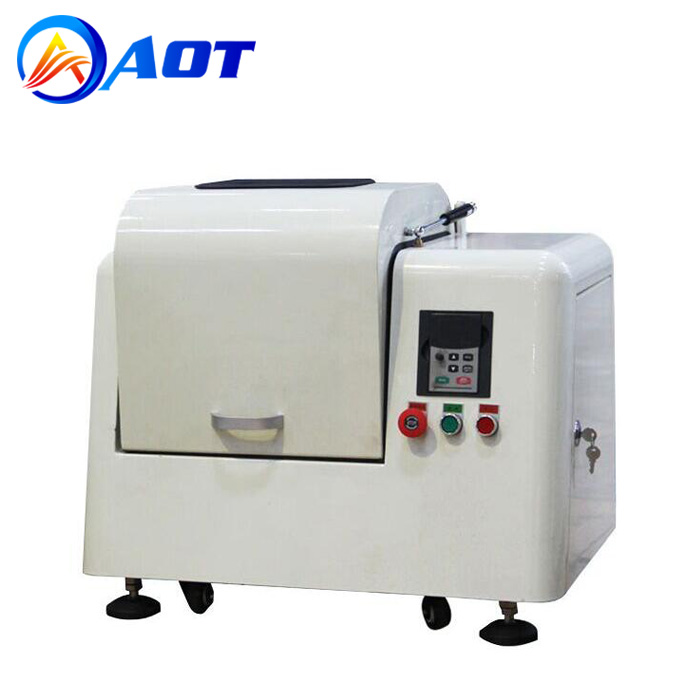
A wide range of grinding jars and grinding media are available to match different raw‑material properties. Available jar materials cover metallic options such as 304 stainless steel and cemented carbide, non‑metallic options including corundum alumina, zirconia and agate, as well as polymer materials like nylon, polyurethane and PTFE. This flexible selection lowers sample contamination risk during grinding. The equipment serves sample‑processing tasks across geology, mineral resources, metallurgy, electronics, building materials, ceramics, fine chemicals, light‑industry pharmaceuticals and environmental monitoring. It can process feedstock such as soil, ore, ceramic raw materials, pharmaceutical intermediates and plant‑derived fibrous substances.
Operators are allowed to customize key process parameters according to material characteristics, including rotational speed, forward‑reverse alternating interval and total grinding duration. Continuous running for up to 72 hours is supported. Feed particle size can be up to 10 mm for soil‑like materials and 3 mm for other brittle raw materials, covering requirements from laboratory exploratory tests to small‑scale trial production.
Industry insiders point out that breakthroughs in new‑material industries rely heavily on high‑performance laboratory equipment. Domestic powder‑processing laboratory instruments are evolving from simple functional imitation toward comprehensive improvements in noise reduction, service life, multi‑scenario compatibility and intelligent safety features. Featuring compact footprint, high efficiency, low noise and flexible working‑mode adaptability, this silent planetary ball mill is well‑suited for research institutes, higher‑education institutions and enterprise R&D labs. It accelerates R&D iteration of new‑energy materials, nano‑cellulose, advanced ceramics and other cutting‑edge materials and underpins innovative development of China’s new‑material sector.
Contact: Lika
Phone: +86-19906035385
Tel: 0086-592-7161550
Email: sales@aotbattery.com
Add: No.168, Zhaogang Road, Xiamen City, China
 1173116801
 sales@aotbattery.com