
Home > News
The global demand for high-performance, safe, and low-cost energy storage systems has propelled rapid innovation in battery materials and device engineering. Electroanalytical techniques, including cyclic voltammetry (CV), linear sweep voltammetry (LSV), electrochemical impedance spectroscopy (EIS), and galvanostatic charge-discharge (GCD) tests, rely on stable and reliable electrode setups. The three-electrode configuration, composed of a working electrode, counter electrode, and reference electrode, eliminates interference from ohmic drop and potential drift, ensuring precise data acquisition. Glassy carbon electrodes, platinum sheet electrodes, and Ag/AgCl reference electrodes have become the gold standard in battery labs due to their exceptional chemical stability, wide potential window, and reproducible performance. Their coordinated application not only improves experimental accuracy but also facilitates cross-disciplinary collaborative research, accelerating the translation of lab-scale discoveries into practical battery technologies.
Individual Roles of Key Electrodes in Battery Laboratories
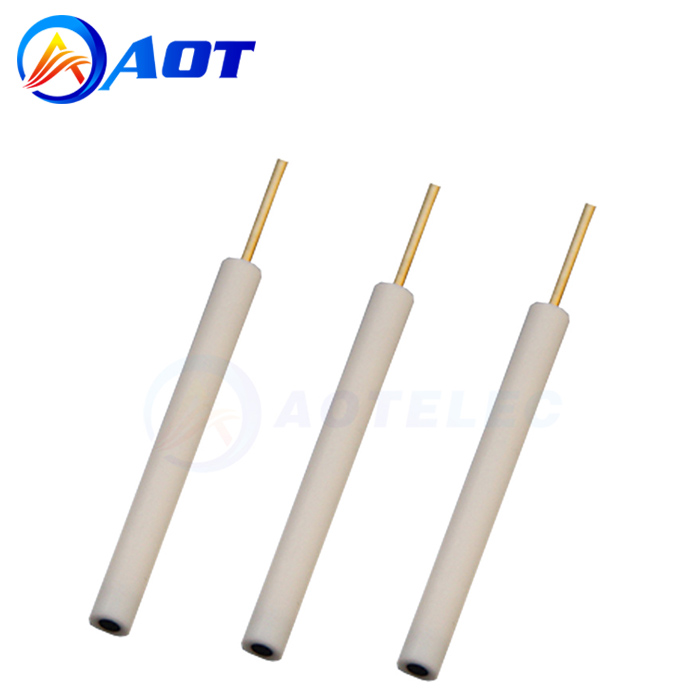
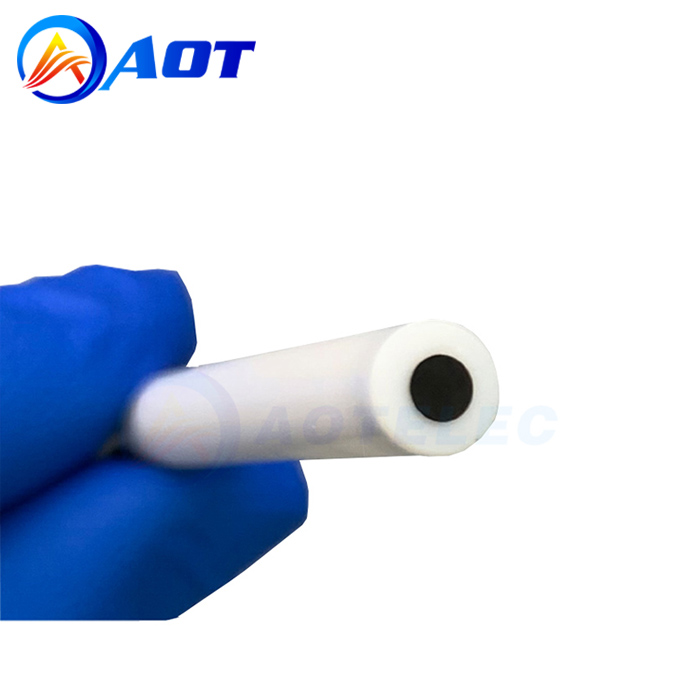
Glassy Carbon Electrode (GCE): Versatile Working Electrode Platform
Glassy carbon, a non-graphitizing amorphous carbon material with a smooth, defect-poor surface, exhibits high electrical conductivity, chemical inertness, and mechanical strength. In battery research, GCE serves predominantly as a working electrode substrate for evaluating electroactive materials, catalysts, and electrolyte stability. Its wide electrochemical potential window (typically from -1.0 V to 1.0 V vs. Ag/AgCl in aqueous electrolytes) allows investigation of redox reactions of various battery materials, including lithium-ion cathodes/anodes, sodium-ion electrodes, solid-state electrolytes, and electrocatalysts for oxygen reduction/evolution reactions (ORR/OER) in metal-air batteries.
GCE’s low background current and minimal adsorption effects ensure accurate detection of weak electrochemical signals, making it ideal for screening novel nanomaterials such as metal-organic frameworks (MOFs), covalent organic frameworks (COFs), and two-dimensional (2D) materials. Moreover, its easy surface modification enables the fabrication of composite electrodes by drop-casting, electrodeposition, or spin-coating, mimicking practical battery electrode structures. In additive manufacturing and material formulation studies, GCE provides a consistent platform to compare the electrochemical activity of different materials, guiding the optimization of electrode composition and microstructure.
Platinum Sheet Electrode: Stable Counter Electrode for Current Conduction
Platinum sheet electrodes are universally adopted as counter (auxiliary) electrodes in battery electrochemical measurements, owing to their outstanding corrosion resistance, high electrical conductivity, and catalytic inertness in most electrolytes. The primary function of the counter electrode is to complete the electrical circuit by carrying the current generated at the working electrode without undergoing undesired side reactions. Platinum’s low overpotential for hydrogen evolution and oxygen reduction reactions minimizes polarization interference, ensuring that the applied potential is accurately imposed on the working electrode.
In battery labs, platinum sheet electrodes are commonly used with dimensions of 10 mm × 10 mm or larger, providing sufficient surface area to reduce current density and avoid concentration polarization. They are compatible with aqueous, organic, and solid-state electrolytes, supporting characterization of various battery systems, including lithium-sulfur batteries, zinc-ion batteries, and supercapacitors. Unlike other carbon-based counter electrodes, platinum sheets maintain structural integrity over long-term cycling, reducing experimental errors caused by electrode degradation. Their stability is particularly critical for EIS measurements and long-cycle life tests, where consistent electrode performance is essential for reliable data interpretation.
Ag/AgCl Reference Electrode: Stable Potential Benchmark
The Ag/AgCl reference electrode, consisting of a silver wire coated with silver chloride and immersed in a saturated potassium chloride (KCl) solution, provides a stable and well-defined reference potential (approximately +0.197 V vs. standard hydrogen electrode, SHE). As the potential reference point for all electrochemical measurements, it eliminates potential drift caused by solution composition changes or current flow, enabling accurate determination of working electrode potentials.
In battery research, Ag/AgCl electrodes are preferred for aqueous electrolyte systems due to their ease of use, low cost, and compatibility with neutral, acidic, and alkaline solutions. They are widely applied in zinc-ion batteries, aqueous lithium-ion batteries, and electrochemical capacitor testing. With proper sealing and salt bridge design, Ag/AgCl electrodes can also be adapted to organic electrolyte systems, expanding their utility in non-aqueous battery characterization. Their stable potential output ensures reproducibility of CV, LSV, and GCD results, which is vital for comparing data across different experiments and research groups.
Synergistic Collaboration of Three Electrodes in Battery Experiments
The strength of the three-electrode system lies in the synergistic collaboration of GCE, platinum sheet, and Ag/AgCl electrodes, which collectively enables comprehensive and accurate battery material evaluation. In a typical electrochemical cell setup, the GCE is loaded with target battery materials as the working electrode, the platinum sheet acts as the counter electrode to conduct current, and the Ag/AgCl electrode provides a fixed potential reference. This configuration isolates the working electrode’s electrochemical response from external disturbances, allowing precise measurement of key parameters such as redox potential, specific capacity, rate capability, charge transfer resistance, and cycling stability.
For example, in the characterization of lithium-ion battery anode materials, the GCE-supported electrode undergoes lithiation/delithiation reactions under the potential control of the Ag/AgCl reference electrode, while the platinum sheet counter electrode ensures efficient current collection. CV tests reveal the redox peaks corresponding to lithium ion intercalation/deintercalation, EIS analysis quantifies interfacial resistance and diffusion kinetics, and long-term GCD cycling evaluates material durability. Without the coordinated function of the three electrodes, these measurements would suffer from severe potential drift, high background noise, and unreliable data.
This synergistic system also supports advanced research directions, including in-situ electrochemical characterization, operando spectroscopy, and multi-scale simulation validation. By integrating the three-electrode setup with microscopic imaging or spectroscopic techniques, researchers can observe real-time structural evolution of battery materials during electrochemical reactions, bridging the gap between macro-performance and micro-mechanisms. Such capabilities are essential for understanding failure mechanisms, optimizing material design, and developing high-performance battery systems.
Glassy carbon electrodes, platinum sheet electrodes, and Ag/AgCl reference electrodes are indispensable components of modern battery laboratories, each performing unique and irreplaceable functions. The GCE provides a versatile platform for evaluating electroactive materials, the platinum sheet ensures stable current conduction as a counter electrode, and the Ag/AgCl electrode delivers a reliable potential reference. Their synergistic collaboration enables accurate, reproducible electrochemical characterization, supporting fundamental research and applied development of advanced battery systems. As a standardized experimental platform, this three-electrode system fosters cross-institutional collaborative research, promotes testing protocol standardization, and accelerates the innovation of energy storage technologies. With continuous optimization and integration with emerging technologies, these electrodes will continue to drive breakthroughs in battery research, contributing to the global transition to clean and sustainable energy.
Contact: Lika
Phone: +86-19906035385
Tel: 0086-592-7161550
Email: sales@aotbattery.com
Add: No.168, Zhaogang Road, Xiamen City, China
 1173116801
 sales@aotbattery.com