
Home > News
In the precision manufacturing processes of cylindrical lithium batteries, nickel-metal hydride batteries, and nickel-cadmium batteries, the battery slotting machine is a core precision device that determines the battery's sealing performance, operational safety, and product yield. This equipment achieves uniform slotting and rolling on the surface of cylindrical steel battery shells through precise mechanical rolling and intelligent control systems. The accuracy of slotting, operational stability, and processing consistency directly affect subsequent welding, packaging, and final product airtightness, making it an indispensable key process equipment in new energy battery production lines. Many battery manufacturers often encounter issues such as inconsistent slot depth, unstable equipment operation, and high product defect rates when selecting and purchasing these machines.
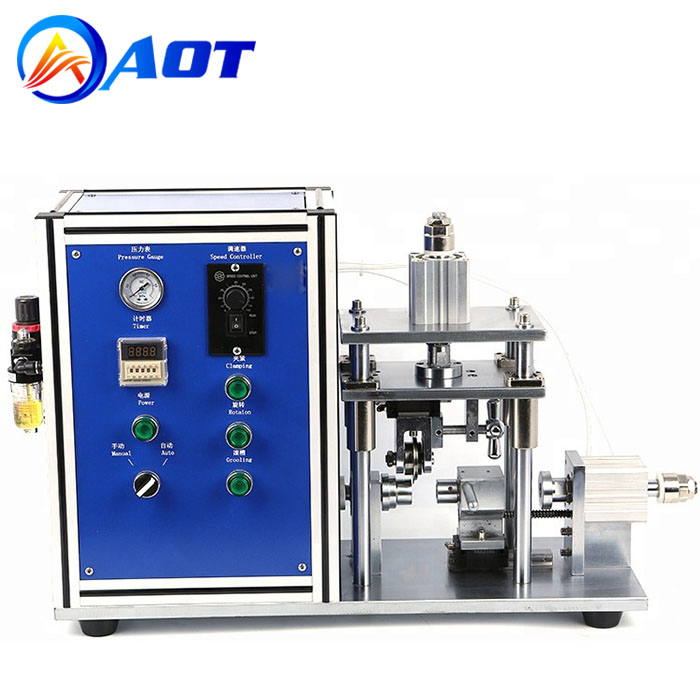
1. Core Working Principle and On-Site Application Scenarios of Battery Grooving Machines
Battery Grooving machines employ a PLC-based fully automated program control system combined with multi-station closed-loop pressure feedback technology, enabling full automation throughout the entire process—including automatic loading, visual positioning, constant-pressure rolling, in-line inspection, and automatic sorting of defective products. Unlike traditional simple mechanical slotting devices, high-quality battery grooving machines are equipped with high-precision gear-cutting tools and an integrated rigid frame structure, ensuring even force distribution during shell processing and fundamentally preventing defects such as shell deformation and misaligned slots.
In high-intensity industrial production environments, this equipment demonstrates exceptional operational stability. Designed for mass production of 18650/21700 power batteries for new energy vehicles, the fully automatic battery slotting machine can operate continuously for 72 hours in a workshop environment at 45°C. Throughout the entire operation, the slot depth error is consistently controlled within ±0.03mm, with a slot profile consistency pass rate as high as 99.8%, fully meeting the stringent processing standards required for automotive power batteries.
2. Comparative Analysis of Different Types of Battery Grooving Machines
Most customers conduct multi-dimensional equipment comparisons before purchasing battery grooving machines. Currently, the mainstream market devices are divided into fully automatic and semi-automatic battery grooving machines, which differ significantly in performance parameters, investment costs, and applicable scenarios. Matching the appropriate equipment to one's production scale is crucial for enterprises to reduce costs, improve efficiency, and enhance product yield.
From the perspective of production efficiency and operational stability, the fully automatic battery grooving machine features a multi-station rotary table layout, integrating automatic loading, vision inspection, and automatic unloading into one system. It achieves an hourly output of 8,000 to 12,000 batteries per unit, offering three times the productivity of semi-automatic equipment. Equipped with an online precision inspection system, the machine automatically identifies and rejects defective products with insufficient slot depth or deformed grooves, reducing manual inspection labor costs by 35%. It is the preferred choice for large-scale mass production lines in power batteries and energy storage batteries.
The semi-automatic battery grooving machine features a compact structure, offering lower equipment acquisition and maintenance costs. It supports stepless speed adjustment and customizable slotting duration, with low operational complexity and flexible model switching. However, the machine requires manual loading and unloading, resulting in relatively limited production efficiency. It is primarily suitable for small to medium-sized battery factories, sample prototyping, and small-batch processing of multiple product types.
From the perspective of durability and failure rate, industrial-grade high-quality grooving machines feature an integrated rigid frame and wear-resistant alloy rolling tools. After 100,000 slotting tests, tool wear error remains below 0.02mm, with an annual equipment failure rate under 1%. In contrast, low-cost standard grooving machines commonly available on the market tend to develop issues such as tool deformation and unstable pressure over prolonged operation, resulting in a battery grooving defect rate exceeding 3%. This significantly delays subsequent processes like packaging and inspection, increasing production loss costs for enterprises.
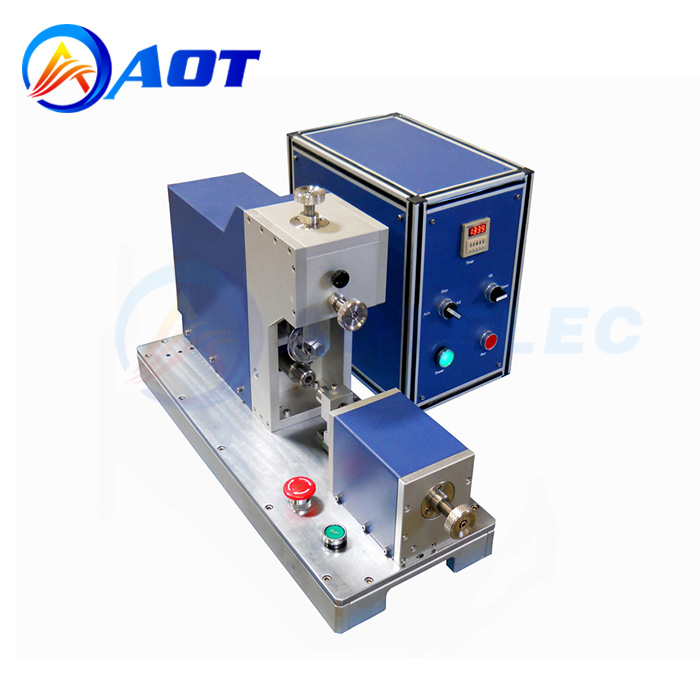
3. Frequently Asked Questions about Battery Grooving Machines
(1)Why do uneven slotting and casing deformation frequently occur during battery slotting?
The main causes of these defects are threefold: first, unstable pressure control systems leading to inconsistent rolling force; second, insufficient tool precision or long-term wear causing slot misalignment; third, poor positioning accuracy resulting in battery casing displacement during processing. High-quality grooving machines equipped with closed-loop pressure control systems and high-precision vision positioning modules can eliminate these defects at the process level.
(2)What battery models can the universal battery slotting machine process?
The industrial standard grooving machine is compatible with all mainstream cylindrical battery models on the market, including 18650, 21700, 26650, 32650, CR123, AA, AAA, and more. It fully covers consumer batteries, power batteries, and energy storage batteries, offering excellent equipment adaptability.
(3)How to evaluate the quality of a battery grooving machine? The key indicators for assessing equipment quality are grooving accuracy, continuous operation stability, product defect rate, and equipment compatibility. High-quality industrial-grade slotting machines can maintain a processing accuracy of ±0.03mm over long periods, achieve a production defect rate below 0.2%, support rapid switching between multiple battery models, and have extremely low maintenance costs.
(4)What is the daily maintenance schedule and care method for a battery grooving machine?
Routine basic maintenance includes cleaning the cutting tools and inspecting equipment fasteners. Weekly tasks involve lubricating transmission components and calibrating pressure system parameters. Monthly checks require comprehensive testing of positioning system accuracy and tool wear. Proper maintenance can extend the equipment's service life to over 8 years.
(5)Is it necessary to purchase a fully automatic grooving machine for small-batch production? There's no need for blind purchases. For medium and small battery factories with daily output under 30,000 units, or customized small-batch production scenarios, a semi-automatic slotting machine is sufficient to meet production needs, effectively saving on equipment and facility costs. Fully automatic machines are better suited for large-scale mass production lines requiring high capacity and precision.
As a core precision equipment in cylindrical battery production, the battery slotting machine directly determines the yield and safety of finished batteries. When selecting and purchasing equipment, companies should choose based on their production scale and processing requirements, clearly distinguishing the performance differences between fully automatic and semi-automatic machines, avoiding the pitfalls of blindly pursuing low prices or over-specifying. Selecting industrial-grade slotting equipment with high precision, high stability, and low failure rates can effectively reduce production losses, improve product pass rates, and provide solid technical support for the market competitiveness of battery products.
Contact: Lika
Phone: +86-19906035385
Tel: 0086-592-7161550
Email: sales@aotbattery.com
Add: No.168, Zhaogang Road, Xiamen City, China
 1173116801
 sales@aotbattery.com