
Home > News
1. What is a Battery Muffle Furnace?
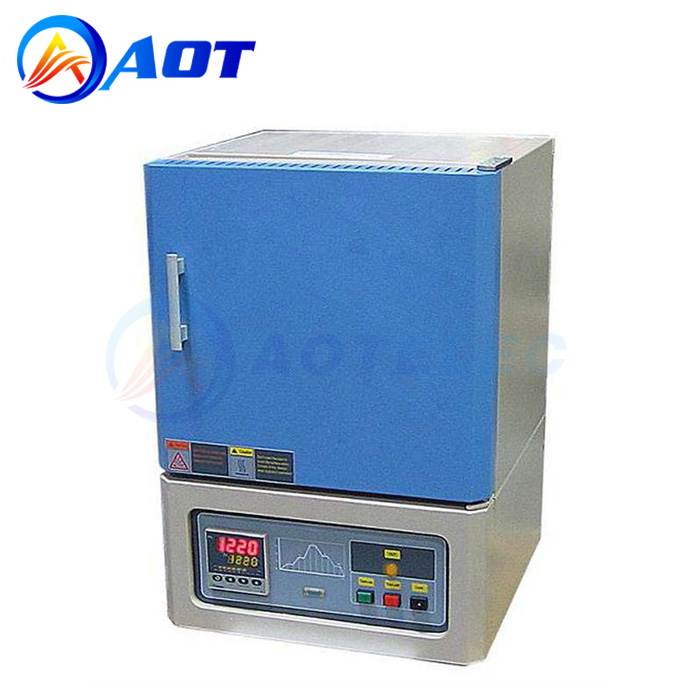
A battery muffle furnace is a sealed high-temperature calcination device specifically designed for thermal processing of materials in the upstream and downstream lithium battery industry. Unlike general-purpose ceramic or metalworking muffle furnaces, this equipment is fully optimized for sintering processes involving lithium-based powders such as lithium salts, ternary precursors, lithium iron phosphate, and silicon-carbon anodes. It supports multiple heating environments including air, nitrogen, argon, and vacuum protection, covering a temperature range from 200°C to 1200°C. It is widely used in laboratory R&D and small-scale pilot production of battery materials.
Conventional muffle furnaces only meet basic high-temperature heating requirements and lack features such as corrosion resistance against lithium compounds, high-precision temperature control, and high airtightness. In contrast, battery muffle furnaces are specialized thermal treatment equipment tailored for the lithium battery industry. Each unit undergoes a 72-hour continuous high-temperature durability test before leaving the factory, ensuring that temperature control accuracy, furnace chamber cleanliness, and atmosphere sealing performance all meet the production and acceptance standards for battery raw materials.
2. Core Functions of a Battery Muffle Furnace
(1) The crystallization and sintering of lithium battery materials determine the fundamental electrochemical performance. Raw electrode materials such as ternary compounds, lithium iron phosphate, and lithium titanate are merely precursor powders that inherently lack energy storage capability. When these powders are placed in a battery muffle furnace and subjected to high-temperature calcination according to specified temperature zones and heating profiles, internal atomic reorganization occurs, forming stable and ordered crystal structures—this endows the material with core capabilities for charging, discharging, and energy storage. If sintering temperature, dwell time, or temperature uniformity fails to meet requirements, the resulting crystals will be defective, leading to issues in finished batteries such as low capacity, short cycle life, and swelling during fast charging. Under continuous 72-hour constant-temperature calcination conditions, this equipment maintains a temperature difference within the constant-temperature zone of ≤±3°C, ensuring consistent crystal development across batches and delivering stable performance in final battery products.
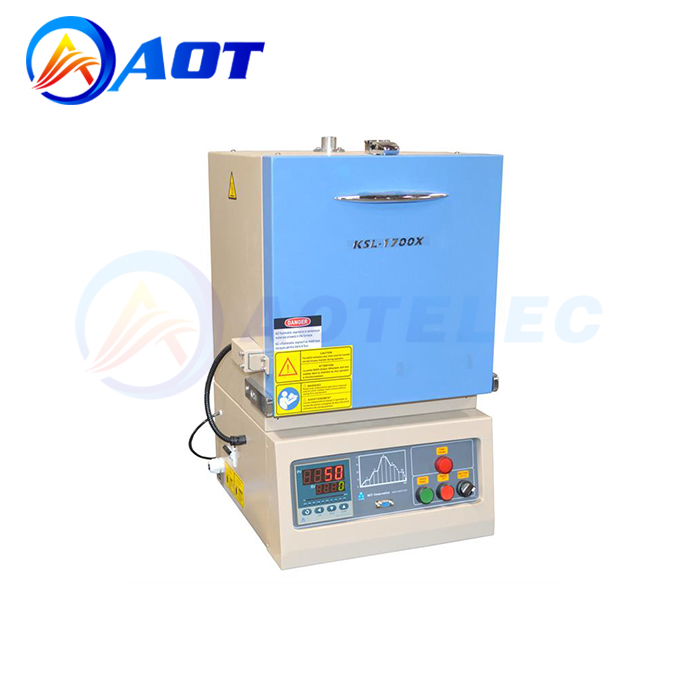
(2) Isolate oxygen to prevent oxidation and failure of the anode and high-end cathode materials. Silicon-carbon anodes and high-nickel ternary materials are highly susceptible to oxidation reactions with atmospheric oxygen at elevated temperatures, directly leading to significant capacity degradation. Atmosphere-controlled muffle furnaces feature a double-layer water-cooled sealed flange that creates a fully enclosed chamber, enabling evacuation followed by the introduction of nitrogen or argon to exclude air, maintaining residual oxygen levels stably below 10 ppm. Thanks to this airtight protection, material oxidation and waste are prevented at the source, making it an indispensable processing equipment for manufacturing high-end energy storage and power lithium battery anode materials.
(3) High-temperature removal of internal impurities, moisture, and organic residues: During the production of precursor powders, moisture, nitrates, and organic impurities may remain. Directly using such materials as electrodes can lead to severe battery self-discharge and gas swelling. The battery muffle furnace employs a stepwise temperature increase: low-temperature drying to remove moisture, medium-temperature decomposition and volatilization of impurities, and high-temperature crystallization. This process achieves one-step purification and refinement of the powder without requiring additional pretreatment steps, thereby simplifying the production line.
(4) Standardizing the experimental environment ensures reproducibility of R&D data. During the new material development phase in universities and enterprises, multiple control experiments are required to screen for optimal sintering processes. The battery muffle furnace features a continuously adjustable heating rate from 0.1 to 10°C/min, stable temperature control and data acquisition accuracy, and can operate uninterrupted for 72 hours without thermal field drift, ensuring uniform heating across multiple crucibles within the same furnace. Thanks to precise temperature control and reliable operation, researchers achieve consistent experimental conditions each time, enabling repeatable data comparison and significantly shortening the R&D cycle for new material formulations and sintering processes.
3. Comparative Analysis of Battery-Specific Muffle Furnaces vs. General Industrial Muffle Furnaces
During the procurement phase, customers conduct extensive price comparisons and proactively identify differentiated advantages, which better reflects the equipment manufacturer's objectivity and professionalism. A horizontal comparison based on core usage requirements is essential:
(1) Core Performance Comparison
Temperature Control: Conventional muffle furnaces can only meet the requirements of metalworking and ceramic coarse processing, with a temperature difference in the constant-temperature zone of ±8–10°C. In contrast, battery-specific muffle furnaces are optimized for lithium battery materials with specially designed airflow channels and heating element layouts, achieving a temperature difference in the constant-temperature zone of ≤±3°C, precisely matching the stringent sintering processes required for battery materials.
Corrosion-resistant lining: Standard equipment features a carbon steel inner tank, which is not resistant to high-temperature corrosion by lithium salts; the lithium battery version uses a single-piece high-purity alumina furnace chamber, seamless and non-flaking, eliminating contamination of electrode materials by heavy metal impurities.
Atmosphere sealing capability: The standard muffle furnace features a single-layer, simple seal suitable only for heating in air; the battery muffle furnace is equipped with a double-layer water-cooled sealed flange, compatible with various inert atmospheres such as vacuum, nitrogen, and argon, ideal for sintering of all types of anode and ternary materials.
Long-term operational stability: Standard muffle furnaces are designed for a maximum of 12 hours of continuous daily operation, and prolonged high-temperature use can easily cause heating element burnout. In contrast, battery-specific models are engineered to operate continuously for up to 72 hours without interruption, featuring thickened oxidation-resistant coatings on heating elements, reducing furnace failure rates by 70% during year-round high-frequency cycles.
(2) Comparison of Procurement Cost and Total Operating Cost
In terms of short-term procurement price, standard muffle furnaces have a lower unit cost. However, their long-term hidden costs are extremely high: conventional units experience an average of 1–2 monthly breakdowns, require frequent replacement of inner liners and heating elements, and result in material scrap rates exceeding 15%. In contrast, battery-specific muffle furnaces involve a slightly higher initial investment but require fewer than two component replacements per year, maintain a stable sintering yield rate above 99%, and allow medium- to small-scale material manufacturers to recover the price difference within six months.
4. Common High-Frequency Core Questions and Answers
(1) Why does sintering lithium iron phosphate in a conventional muffle furnace often result in substandard performance? Two key defects: first, the carbon steel furnace chamber corrodes under high temperature, causing lithium to flake off and mix with impurities that degrade electrochemical performance; second, insufficient temperature uniformity leads to inconsistent calcination of materials at different positions within the furnace, resulting in significant batch-to-batch variations in capacity and cycle life. Only furnaces with specialized alumina liners for lithium batteries and precise temperature control can resolve these issues.
(2) How long can the battery muffle furnace operate continuously without interruption? The equipment undergoes a 72-hour full-temperature uninterrupted aging test before leaving the factory. Under normal production conditions, it can maintain continuous cyclic operation for up to five days, requiring only brief shutdowns each day to clean crucible residue. It is not recommended that standard industrial muffle furnaces operate continuously for more than 12 hours, as this may easily lead to damage of the heating components.
(3) Must a gas atmosphere furnace be used for sintering silicon-carbon anodes? Yes, a vacuum or controlled atmosphere furnace is essential. Silicon materials rapidly oxidize when exposed to air at high temperatures, resulting in a direct capacity loss of over 40%. A standard air-furnace cannot meet the production requirements for anode materials.
The sintering process for lithium battery materials imposes stringent requirements on thermal treatment equipment—such as temperature field accuracy, corrosion resistance, atmosphere sealing, and long-term operational stability—that exceed those of conventional heat treatment systems. Relying solely on low-cost, general-purpose muffle furnaces can lead to multiple losses, including material waste, frequent shutdowns, and disruptions in export trade.
Contact: Lika
Phone: +86-19906035385
Tel: 0086-592-7161550
Email: sales@aotbattery.com
Add: No.168, Zhaogang Road, Xiamen City, China
 1173116801
 sales@aotbattery.com