
Home > News
In the lithium battery cell assembly process, stacking is a critical step that determines the cell's flatness, consistency, and safety stability. The Battery Stacking Machine is primarily used to precisely stack positive and negative electrode sheets and separators in an alternating sequence, replacing traditional manual stacking and outdated stacking equipment. It is widely applied in the cell forming processes of power batteries, energy storage batteries, and consumer lithium batteries. However, many buyers focus only on the machine's appearance and price when selecting models, overlooking its adaptability, fault tolerance, and long-term stability under actual production conditions.
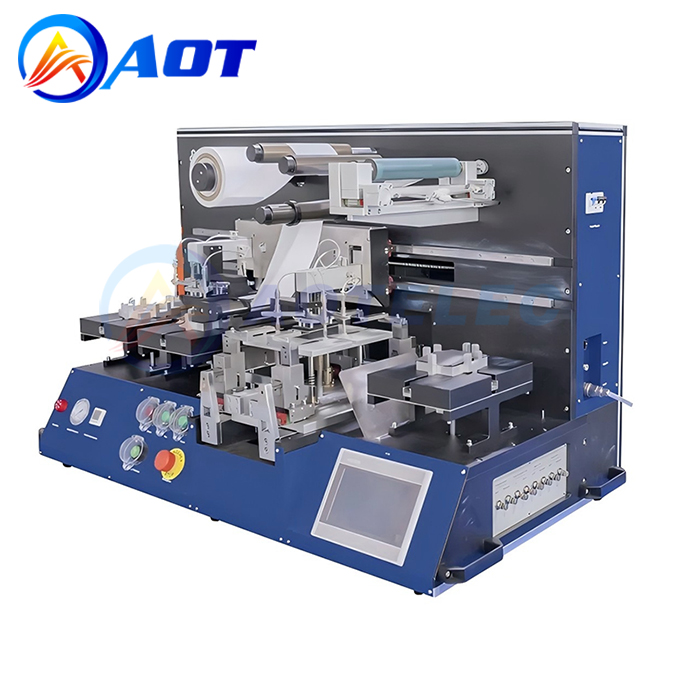
1. Core Function of Battery Stacking Machine
The battery stacking machine is the core forming equipment in lithium battery lamination processes, directly affecting cell yield and subsequent battery cycle performance. Its primary function is to automatically complete tasks such as separator unwinding, electrode sheet pickup, precise alignment, alternating stacking, and cell compaction, effectively resolving common issues associated with manual stacking—such as misalignment, separator wrinkling, and electrode misplacement. By standardizing mechanical operations, it ensures consistent spacing, tightness, and flatness across every cell, reducing quality risks like short circuits, self-discharge, and swelling at the process source. This makes it suitable for both R&D prototyping and large-scale mass production.
2. Real-world Application Scenarios
Unlike generic marketing claims about "stable performance and high precision" for ordinary equipment, the advantages of battery stacking machines become clearly evident under actual production conditions.
Battery Cell Mass Production Cleanroom Scenario: Under continuous operation in a standard lithium battery cleanroom encapsulation environment, the battery stacking machine can maintain long-term automated operation, adapting to high-frequency, uninterrupted mass production cycles. When handling thin and delicate positive and negative electrode sheets, the equipment ensures stable pickup and precise alignment during high-speed cyclic stacking, preventing issues such as electrode corner folding, damage, or separator misalignment. For large-scale continuous production demands, the equipment operates stably without lag or positional deviation, effectively ensuring uninterrupted production flow across the entire line, fully meeting the stringent requirements of large-scale battery cell manufacturing.
Precision production and R&D prototyping for small battery cells: In the precision manufacturing of digital lithium batteries and compact energy storage cells, as well as in laboratory pilot-scale trials, conventional equipment often suffers from minor misalignment, resulting in low yield rates for small-sized cells. A dedicated battery stacking machine is designed to accommodate fine stacking processes for small-format cells, offering gentle operation and precise alignment. It meets the requirements for prototyping new formulations and innovative cell structures, ensuring consistent standards in every sample stacking process, thereby enhancing the reliability and repeatability of R&D data.
High-safety-standard energy storage battery production scenario: Energy storage batteries demand extremely high standards for cell alignment and safety. Any misalignment during stacking can easily lead to potential safety hazards during later use. This equipment ensures that after forming and stacking, the cells are uniformly compacted and neatly arranged, with complete and even separator wrapping, effectively eliminating issues such as exposed bare electrodes or excessive local gaps, meeting the process requirements for long-term stable operation of energy storage batteries.
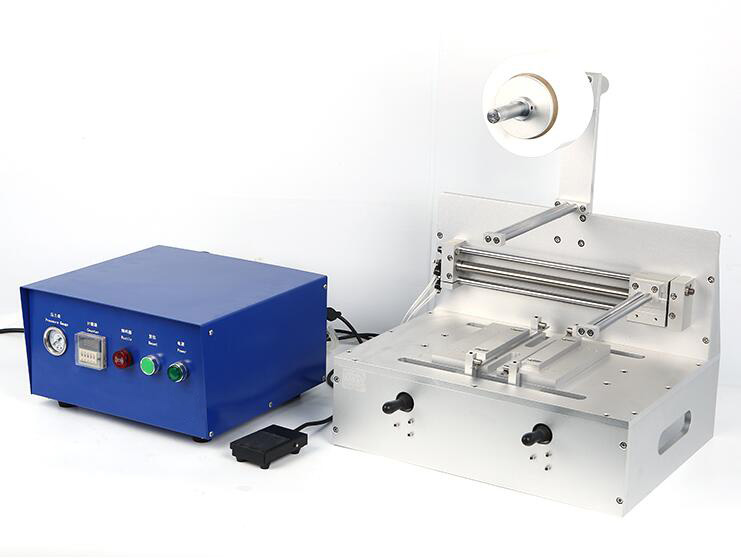
3. Comparative Analysis: Conventional Stacking Equipment vs. Professional Battery Stacking Machine
When purchasing, customers typically compare the differences between semi-automatic stacking machines, outdated reciprocating stacking equipment, and fully automatic battery stacking machines. The core advantage of a high-quality supplier lies in the subtle yet significant differences in real-world operating conditions.
(1) Comparison of alignment accuracy and product consistency: Conventional semi-automatic stacking equipment relies on manual assistance for alignment and correction, introducing uncontrollable errors due to human operation. This results in inconsistent cell stacking tightness and noticeable misalignment across batches, leading to poor product consistency and potential issues such as uneven charging and discharging during later battery use. In contrast, professional battery stacking machines employ fully automatic vision-based alignment and closed-loop control systems, enabling mechanical auto-correction throughout the process without human intervention. This ensures completely uniform stacking standards for every cell group, achieving high batch-to-batch quality consistency.
(2) Comparison of Operational Stability and Failure Rate: Older stacker equipment features a simple structure, which is prone to mechanical misalignment, stalling, and unstable feeding during high-speed continuous operation. Frequent shutdowns for adjustments and fault clearance are required, significantly impacting production line capacity. In contrast, professional battery stacking machines employ optimized mechanical transmission structures and intelligent monitoring systems, enabling them to adapt to long-term, high-load mass production conditions. They operate smoothly and stably with minimal downtime, effectively ensuring continuous and stable output from the production line.
(3) Yield and Material Loss Comparison: Conventional equipment tends to have higher defect rates, such as electrode sheet damage, separator wrinkling, and misalignment during stacking, leading to significant waste of electrode sheets and separator materials and increased production costs. In contrast, professional stacking machines feature gentle handling and precise stacking logic, greatly reducing material loss and significantly improving yield. Long-term mass production with these machines effectively reduces both material and labor costs.
(4) Automation level versus labor cost: Traditional equipment requires dedicated personnel to monitor operations, frequently replenish materials, adjust alignment, and inspect finished products. In contrast, the fully automatic battery stacking machine supports automatic feeding, stacking, discharging, and inspection, enabling a single operator to manage the entire system, significantly reducing the company's labor requirements.
4. Frequently Asked Questions
(1) Why do membrane wrinkles frequently occur during stack production?
Membrane wrinkles are mostly not caused by material issues, but rather by unstable equipment alignment, uneven tension control during film winding and unwinding, or mismatched stacking speeds. Inferior equipment has rigid tension control, which can pull the membrane during high-speed stacking, resulting in wrinkles and misalignment. High-quality battery stackers are equipped with intelligent tension adjustment systems that provide flexible film control throughout the process, effectively eliminating membrane wrinkling at the source.
(2) Can a stacker accommodate various cell sizes?
Professional models support quick mold changes and one-click parameter switching, adapting to different electrode and cell dimensions for power batteries, consumer batteries, and energy storage batteries. They are compatible with mainstream stacking processes and meet the diverse production needs of multi-product battery manufacturing.
(3) Is daily maintenance of an automatic stacker complicated?
The equipment features a modular design that allows easy disassembly and cleaning. Core transmission and inspection components are simple to maintain, eliminating complex upkeep procedures. Routine maintenance requires only regular cleaning and basic inspections, making it simple and low-cost.
(4) How can you determine if a stacker is a high-quality industrial-grade machine?
High-quality equipment should meet three key criteria: stable operation without misalignment over long periods, no damage or wrinkling during high-speed stacking, and consistent product quality across batches. Low-cost machines can only handle low-speed sample production and cannot withstand the high-load conditions required for mass production, leading to higher failure rates and declining yield over time.
Contact: Lika
Phone: +86-19906035385
Tel: 0086-592-7161550
Email: sales@aotbattery.com
Add: No.168, Zhaogang Road, Xiamen City, China
 1173116801
 sales@aotbattery.com