
Home > News
1. Raw Materials & Manufacturing Process
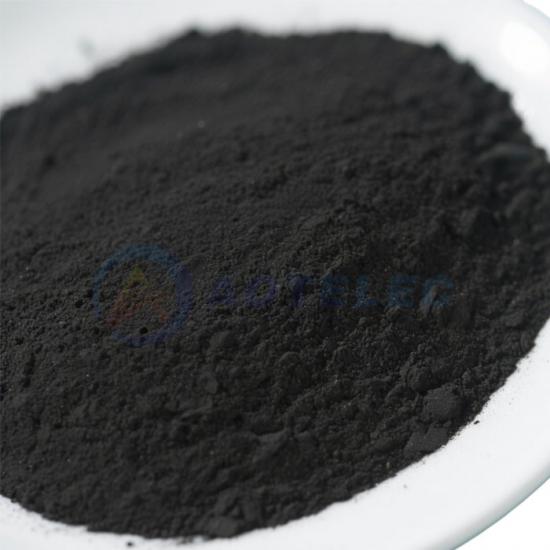
YP-80F is exclusively made from premium natural coconut shell carbonized feedstock sourced from Southeast Asia, differing from coal-based and resin-based activated carbon. It is produced via a combined production route of high-temperature steam physical activation and chemical activation. The whole manufacturing flow covers six core working procedures: raw material pre-carbonization, acid pickling for impurity elimination, multi-stage precise activation, ultrafine pulverization, graded particle screening as well as drying and surface passivation, with no extra binders or ash-forming additives added into finished products. Dense fibrous coconut shell raw materials get pre-carbonized under high temperature to strip volatile impurities. Manufacturers precisely adjust activation temperature and holding time to build a composite pore structure consisting mainly of micropores with supplementary mesopores. As Kuraray’s flagship high-grade electrode carbon specially developed for electric double layer capacitors (EDLC), YP-80F also satisfies diversified adsorption demands across multiple industries.
2. Complete Physicochemical & Electrochemical Specifications
2.1 Basic Physical Properties Its BET specific surface area reaches 2100m²/g and total pore volume hits 0.94ml/g, while the average pore diameter ranges between 1.6nm and 1.8nm, all tested by standard nitrogen adsorption and desorption analysis. The finished product keeps moisture content below 0.6% measured through oven drying weight loss test, and ash content is controlled under 0.5% following JIS K1474 ignition standard. The median particle size D50 falls within 5μm to 7μm detected by laser particle analyzer, with tap density ranging from 0.48g/cm³ to 0.52g/cm³ and carbon element purity above 96wt% via elemental composition inspection.
2.2 Core Electrochemical Indicators for Supercapacitor Use The gravimetric specific capacitance is 32F/g under 0~0.8V testing condition with aqueous electrolyte, and volumetric specific capacitance stands at 18F/cc after electrode compaction forming. Its powder resistivity index is 75, meaning lower index corresponds to better electrical conductivity. Iron impurity content is controlled below 19ppm, and many regular batches can achieve 7ppm or less; trace heavy metals including copper, lead and zinc are all kept under 1ppm. Such ultra-low metallic impurities can effectively prevent catalytic decomposition of electrolyte and reduce the risks of capacitor swelling and liquid leakage.
2.3 Detailed Pore Distribution Feature This carbon material adopts a micropore-dominated pore structure assisted by moderate mesopores. Micropores smaller than 2nm account for over 72% of total pore volume, which store electrolyte ions and generate double-layer capacitance. Mesopores sized from 2nm to 5nm occupy roughly 25% of total pore volume and serve as fast transmission channels for electrolyte ions. This structural design balances energy density and high-rate discharge performance and avoids severe capacity drop under large current commonly seen on ordinary activated carbon.
3. Eight Core Product Advantages
3.1 Ultra-low impurity level ensures outstanding electrochemical stability
Strict acid pickling removes inherent inorganic salts and heavy metals from raw coconut shells. Extremely low residual metal contaminants stop electrolyte oxidation and decomposition during electrode application. Compared with conventional domestic coconut shell activated carbon, this material greatly cuts the failure rate such as capacitor leakage and bulging and extends the cycle lifespan of finished supercapacitors by more than 30%.
3.2 Excellent wide-temperature rate discharge performance
It can work steadily under ambient temperature ranging from -40℃ to 65℃. Even in low-temperature environments, electrolyte ions can transfer rapidly inside mesoporous channels, and the capacity fading is less than 8% under 10C and 20C high-rate charge and discharge cycles, fitting vehicle start-stop parts and outdoor energy storage equipment with harsh working conditions.
3.3 Fine processing property with low dust and convenient slurry mixing
After precise ultrafine grinding and surface passivation treatment, the powder generates minimal dust during feeding and mixing. When blended with conductive carbon black and PVDF binder to prepare electrode slurry, it disperses evenly without agglomeration, facilitating smooth coating free of pinholes and improving production yield in electrode compaction procedures.
3.4 High mechanical strength against particle pulverization in long cycling
Carbonized coconut shell forms a rigid carbon skeleton structure. Carbon particles barely crack or shed fine powder under repeated ion embedding and detachment during cyclic charging and discharging, maintaining stable internal resistance and slowing down long-term capacity attenuation.
3.5 Wide-spectrum adsorption for both liquid and gas working conditions
Ultrahigh specific surface area provides abundant active adsorption sites, enabling efficient removal of trace organics, residual chlorine and heavy metal pollutants in water, as well as VOC and small molecular organic solvents in waste gas. Its overall adsorption capacity is around 40% higher than coal-based activated carbon of equivalent specification.
3.6 Strong thermal regeneration and recyclable capacity
Spent saturated activated carbon can recover over 92% of original pore structure and adsorption capacity after thermal regeneration at 500~600℃ under inert atmosphere, and it can be recycled for 3 to 5 regeneration cycles to lower long-term raw material cost.
3.7 Stable performance among different production batches
Produced on fully sealed automatic production lines with fixed-source raw materials, key indicators including specific surface area, pore structure and capacitance keep fluctuation within 3% between batches, guaranteeing repeatable experimental data for lab research and industrial mass production.
3.8 High compatibility with multiple electrolyte systems
It matches symmetric supercapacitors using KOH aqueous electrolyte as well as EDLC devices filled with organic TEABF₄ electrolyte, functioning as standard reference carbon for lab material comparison and commercial supercapacitor manufacturing.
4. Detailed Application Fields
4.1 New Energy Storage (Core Application: Supercapacitors) It is widely used for automotive start-stop supercapacitor modules of passenger and commercial vehicles, supplying instant high-power output to start engines and reduce wear of lead-acid batteries; meanwhile applied in hybrid vehicle energy recovery systems to recycle redundant power produced in braking process. In industrial fields, it makes backup power for PLC control systems, smart instruments, elevator leveling power supply and instantaneous switching power of high-voltage switches in transformer substations to realize uninterrupted power supply during sudden power failure. Besides, it serves as auxiliary high-power power source for port cranes, industrial forklifts and pitch-adjusting backup capacitor modules of wind turbines in rail transit and construction machinery industries. For laboratory development, it works as base raw material for EDLC mechanism research, modified carbon performance benchmarking, MOF composite electrode production and ion capacitor development, also commonly used in lithium anode modification experiments as standard comparison sample.
4.2 Water Treatment & Purification In semiconductor and photovoltaic manufacturing lines, it is applied in terminal advanced purification of ultra-pure water to remove total organic carbon and trace residual heavy metals and satisfy the 18.25MΩ·cm high-purity water standard. Municipal water plants adopt this carbon for advanced drinking water treatment to eliminate disinfection by-products, humic acid, peculiar smell and trace pesticide residues. It is also used for decolorization and COD removal of pharmaceutical, dyestuff and electroplating wastewater to adsorb refractory small-molecule organic pollutants.
5. Packaging Specification & Storage Instructions
5.1 Regular Packaging Options Small lab trial orders are packed in 70g, 200g and 500g plastic bottles; medium pilot production goods adopt 1kg vacuum-sealed Aluminum Foil bags; bulk industrial products use 20kg kraft paper bags lined with PE inner film and vacuum sealed to isolate moisture and air oxidation.
5.2 Storage Requirements Store sealed goods in cool and dry warehouses, avoiding open-air placement and contact with acidic or alkaline corrosive gas. Please consume materials quickly once the package is opened; long-term open storage leads to spontaneous adsorption of ambient moisture and impurities, which damages its original electrochemical and adsorption performance.
6. Comparison with Other YP Series Grades
Compared with YP-50F and YP-170 from Kuraray’s YP product line, YP-80F owns balanced specific surface area and optimized pore structure with comprehensive advantages on capacitance and internal resistance. YP-50F features larger average pore size with lower capacitance but superior high-power performance, while YP-170 has higher specific surface area yet insufficient mesopore content resulting in poor rate capability. Therefore YP-80F is the most balanced mainstream grade widely used in mass production of commercial supercapacitors.
Contact: Lika
Phone: +86-19906035385
Tel: 0086-592-7161550
Email: sales@aotbattery.com
Add: No.168, Zhaogang Road, Xiamen City, China
 1173116801
 sales@aotbattery.com