
Home > News
1.What is a lithium battery slitting machine? Please provide the text you would like translated.
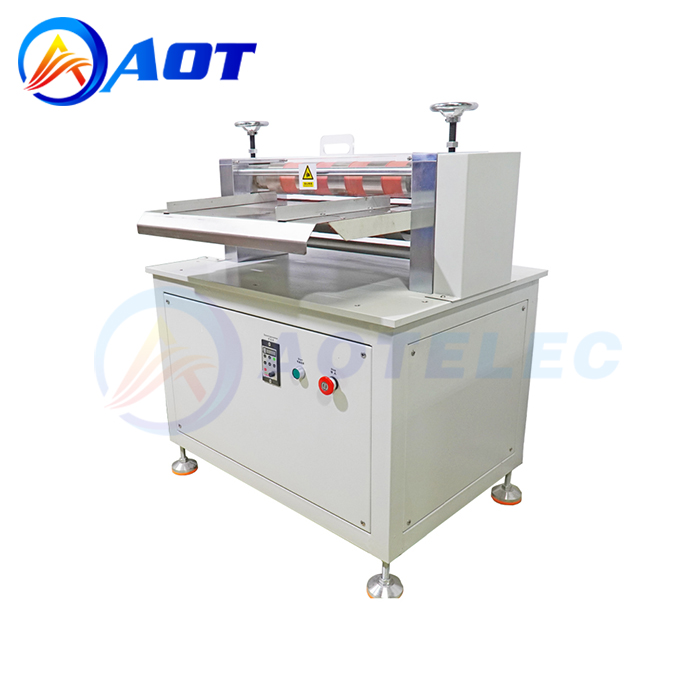
The lithium battery slitting machine is a core automated equipment in the electrode manufacturing process. It precisely cuts wide-format electrodes—positive electrodes (Aluminum Foil substrate + active material coating) and negative electrodes (copper foil substrate + active material coating)—into narrow strips that meet cell specifications, using either mechanical or laser cutting technology. This machine serves as a critical link between electrode coating and cell winding or stacking processes. Its main components include unwinding mechanisms, tension control systems, slitting units, rewinding mechanisms, online inspection systems, and PLC control systems, enabling fully automated operation from raw material unwinding to finished product rewinding. It is capable of processing lithium battery electrodes with thicknesses ranging from 0.008 to 0.2 mm, meeting production requirements across various applications including power batteries, energy storage batteries, and 3C digital batteries. Please provide the text you would like translated.
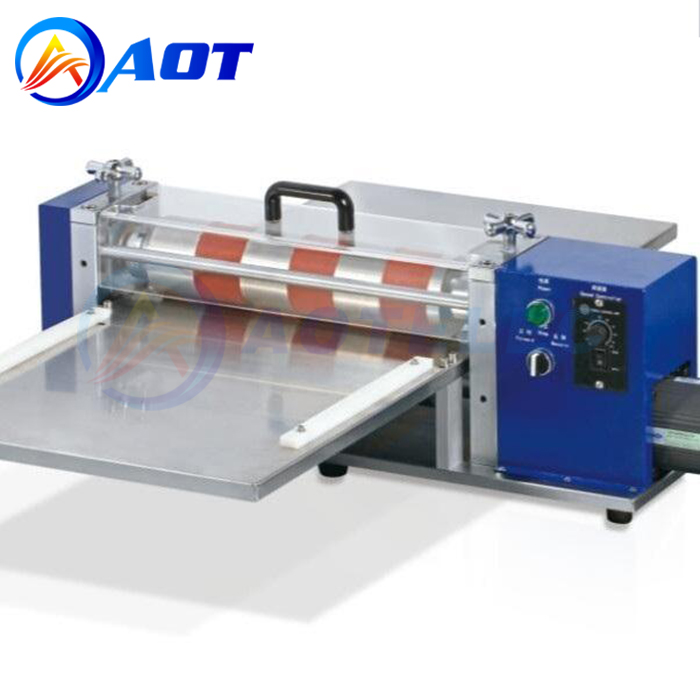
2. Three Core Functions of Lithium Battery Slitting Machines
Specification Adaptability: Meeting Customized Requirements for Different Cells
The diverse application scenarios of lithium batteries—such as the high-capacity demands of power batteries and the miniaturization needs of 3C batteries—require flexible adjustments in electrode width, length, and thickness. Slitting machines enable this adaptability through programmable cutting parameters (e.g., slit width, winding tension, cutting speed), allowing them to precisely cut wide-format electrodes (1000–1500 mm) into customized narrow strips ranging from 20 to 210 mm. This process ensures clean edges and consistent dimensions, laying a solid foundation for subsequent cell winding or stacking operations. For example, electric vehicle power batteries require electrode strips of 120–180 mm in width, while smartwatch batteries need only 25–30 mm wide strips. The machine’s ability to accommodate multiple specifications directly determines the flexibility of cell production. Please provide the text you would like translated.
Quality Control: Enhancing Cell Safety and Consistency
The slitting quality of electrode sheets—such as burr height, edge flatness, and thickness uniformity—directly impacts cell safety performance and cycle life. Slitting machines equipped with tension closed-loop control, in-line laser inspection, and AI-based defect recognition effectively manage electrode burrs (≤12μm), prevent edge cracking, and correct thickness deviations (within ±1.5μm), thereby reducing issues such as cell short circuits and capacity degradation caused by electrode defects. Data shows that production lines using high-precision slitting machines can reduce cell defect rates by over 30% and extend cycle life by 15–20%, making them a core piece of equipment for ensuring product quality in lithium battery manufacturing. Please provide the text you would like translated.
Efficiency Improvement: Supporting Large-Scale Mass Production
Traditional manual slitting processes achieve only 5–10 m/min, with inconsistent precision, whereas automated slitting machines can reach speeds of 80–150 m/min. A single automated machine's daily output equals the workload of 50 manual workers. Additionally, these machines support simultaneous slitting of multiple rolls and continuous operation for up to 72 hours without failure. Integrated with an MES production management system, they enable real-time monitoring and scheduling of capacity, meeting the efficiency demands of large-scale manufacturing scenarios such as power batteries and energy storage batteries. For example, a leading battery manufacturer’s slitting production line achieves a daily output of 500,000 m² of electrode sheets, supporting the supply of battery cells for one million new-energy vehicles annually. Please provide the text you would like translated.
3.Frequently Asked Questions
(1) Why do electrode sheets exhibit uneven width after slitting? Please provide the text you would like translated.
There are three main reasons: ① Failure of the unwind unit's alignment system, causing misalignment in the wide-format electrode sheet feeding; it is recommended to check the sensitivity of the alignment sensor (industry standard ≥0.01mm) and regularly calibrate mechanical positioning accuracy; ② Blade wear or installation deviation of the slitting tool; use a laser alignment instrument to adjust blade parallelism (error ≤0.02mm), or replace with diamond-coated blades; ③ Improper tension control parameter settings; adjust tension values according to electrode material (recommended 5–8N for aluminum foil cathodes, 3–5N for copper foil anodes) to prevent electrode stretching and deformation caused by tension fluctuations. Please provide the text you would like translated.
(2) What is the energy consumption level of slitting machines? Is there a significant difference among different models? Please provide the text you would like translated.
Mainstream slitting machines have a single-unit power consumption of 15–30 kW/h, with energy efficiency differences primarily determined by drive type and automation level: ① Servo-driven models are 18–25% more energy-efficient than variable frequency drive models. For example, a servo-driven slitting machine from one brand can save approximately 36,000 yuan in electricity costs annually when operating 8,000 hours per year; ② High-end models equipped with integrated energy-saving modules (such as energy recovery systems) can further reduce energy consumption by 10%, making them ideal for large-scale production enterprises sensitive to manufacturing costs. It is recommended to select based on your production capacity: for small to medium output (daily electrode processing ≤10,000 m²), choose 15–20 kW models; for large-scale production (daily electrode processing ≥50,000 m²), prioritize 25–30 kW high-power models to achieve a balanced trade-off between efficiency and energy consumption. Please provide the text you would like translated.
(3) How long does it take to install and commission the slitting machine? Is a professional team required? Please provide the text you would like translated.
The installation and commissioning cycle for standard models ranges from 7 to 15 days, divided into three phases: ① Equipment delivery and positioning (2–3 days), requiring professional personnel to use a level to calibrate equipment flatness (error ≤0.2 mm/m); ② Electrical wiring and system commissioning (3–5 days), which requires an engineer qualified in PLC programming to calibrate key parameters such as tension settings and slitting accuracy; ③ Trial production and optimization (2–7 days), during which equipment parameters are adjusted based on feedback from trial-cut electrode sheet quality until production requirements are met. It is recommended to select suppliers offering integrated services including "installation + commissioning + operator training" to avoid equipment damage or substandard precision caused by self-commissioning. Leading suppliers' professional teams can reduce the commissioning period to within 7 days. Please provide the text you would like translated.
(4) Can the slitting machine be compatible with electrode cutting for new types of lithium batteries, such as solid-state batteries? Please provide the text you would like translated.
Traditional slitting machines require technological upgrades to accommodate new lithium battery electrodes: ① Pre-lithiated electrodes for solid-state batteries are harder and more brittle, necessitating diamond tool replacement or upgrading the laser slitting module (power ≥500W) to prevent electrode edge powdering; ② Sodium-ion batteries use aluminum foil as the negative electrode (compared to copper foil in conventional lithium batteries), requiring adjusted slitting tension (recommended 2–4N) to avoid stretching and deformation of the aluminum foil; ③ Suppliers should provide customized slitting solutions—such as the dedicated slitting machine for solid-state batteries recently launched by Lead Intelligent, which features adaptive tension control and in-line laser de-powdering technology to address the challenges of cutting new electrode materials. It is recommended to clearly specify the battery type and electrode parameters to suppliers prior to procurement to avoid compatibility issues. Please provide the text you would like translated.
Contact: Lika
Phone: +86-19906035385
Tel: 0086-592-7161550
Email: sales@aotbattery.com
Add: No.168, Zhaogang Road, Xiamen City, China
 1173116801
 sales@aotbattery.com