
Home > News
1. Core application scenario: Verifying stable performance through data
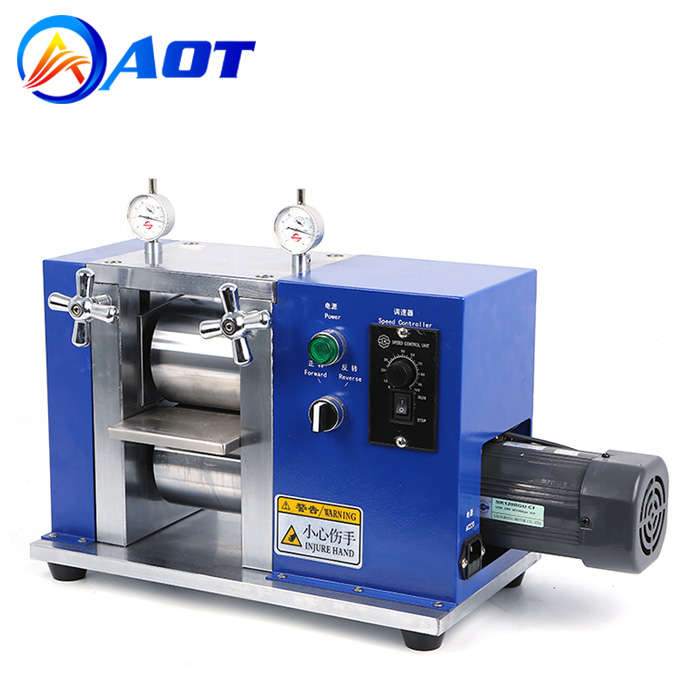
The battery electrode calendering machine, as the "key equipment" in lithium battery production, its accuracy and stability directly determine the energy density, cycle life and safety of the battery cells. The following three typical scenarios visually present the core value of the equipment:
Large-scale production of battery power: In the 24-hour continuous production line of a leading battery manufacturer, the equipment needs to handle positive electrode foil with a width of 1200mm and a thickness of 0.08mm. Using a four-roller rigid structure rolling machine, under a continuous operation of 72 hours at a high temperature of 45℃, the temperature fluctuation of the roller system is controlled within ±0.5℃, and the thickness tolerance of the foil is stable at ±0.5μm, resulting in an increase of 12% in the energy density of the battery cell and a cycle life exceeding 3000 times. Compared with the error range of ±3μm of traditional equipment, the yield rate in this scenario has increased from 92% to 98%.
Precision processing scenario for consumer electronic lithium batteries: For ultra-thin electrode sheets used in mobile phones and laptops (with copper foil substrate thickness of 0.01mm), the equipment uses a laser thickness gauge for real-time feedback + a closed-loop tension control system (tension fluctuation ±0.5N), which has solved the problems of "veiled edges" and fractures of the electrode sheets. During the trial production at an electronics factory, the thickness fluctuation of 1000 meters of the electrode sheet was ≤±1μm, and the surface roughness Ra was ≤0.2μm, fully meeting the process requirements of high-rate fast-charging batteries.
Special battery production scenario in high-temperature environment: In the development of high-temperature batteries for new energy vehicles, the equipment needs to be compatible with high-activity materials such as NCM811. Through the collaboration of high-carbon chromium steel rollers and intelligent temperature control system, even when pressing at 60℃, the fluctuation of the Compaction density of the electrode sheet can be controlled within 0.03g/cm³, avoiding the "thousand-layer cake" structural defect caused by material rebound, and improving the high-temperature cycling stability of the battery by 40%.
2. Industry Comparison Analysis: The Core Logic of Precise Selection
(1) Key Differences between High-Quality and Ordinary Rolling Machines Table
Comparison dimension | High-quality electrode sheet calendering equipment | Ordinary film roll calendering equipment |
Rolling system performance | Four-roll structure, with a 30% increase in rigidity and no deflection deformation | Double-roller structure, prone to develop middle convex / horn-shaped errors during long-term operation |
Energy consumption performance | Optimize the transmission system to reduce energy consumption by more than 15% | Traditional motors have a 20%-30% higher energy consumption per unit of production capacity. |
Adaptability | Supports copper/Aluminum Foils ranging from 0.01 to 0.3mm in thickness, and widths ranging from 200 to 1500mm. | The applicable range is narrow (only supporting substrates with a thickness of 0.05mm or above) |
Thickness accuracy | ±0.5 - 1 μm, supporting online real-time correction | ±3-5 micrometers, adjusted manually |
3. Frequently Asked Questions
Q1: Why does the thickness of the electrode sheet tend to be uneven after rolling?
A: This is mainly due to three main causes: ① Defects in the upstream coating (such as edge thickness variation, surface density fluctuation), which leads to uneven pressure distribution during rolling; ② Insufficient rigidity of the equipment's roller system, resulting in deflection deformation under high pressure, forming middle convex or horn-shaped errors; ③ Slow response of the temperature control system, with inconsistent material rebound amounts. High-quality equipment, through a four-roller structure and real-time thickness measurement feedback, can compensate for upstream defects at the equipment level, controlling the thickness fluctuation to the micrometer level.
Q2: What is the main difference between laboratory-type and mass production-type calendering machines?
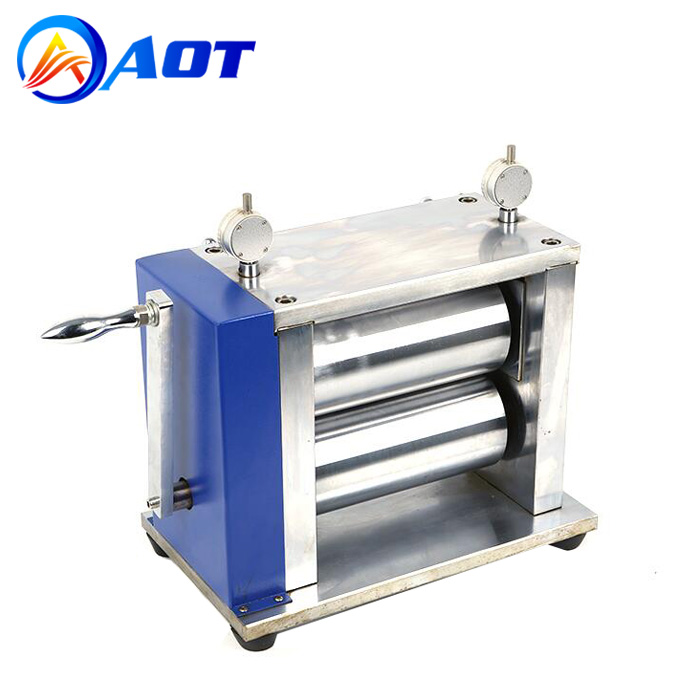
A: The laboratory type focuses on small-scale research and development, with the roller width usually being ≤ 300mm, supporting manual/electric fine adjustment, and suitable for material formula testing; the mass production type emphasizes efficiency and stability, with the roller width being ≥ 600mm, featuring automatic tension control, online detection, and production line linkage functions, and capable of achieving 24-hour continuous production. When selecting, it is necessary to precisely match according to the production capacity requirements (laboratory: ≤ 100,000 pieces/day; mass production: ≥ 500,000 pieces/day).
Q3: What are the reasons why the rollers are prone to damage during equipment operation?
A: Common causes include: ① Foreign objects (such as metal particles) on the electrode sheet have not been removed, resulting in scratches on the roller surface; ② Inappropriate temperature control (temperature difference exceeding ±2℃), causing uneven expansion and contraction of the roller; ③ Excessive pressure, exceeding the tolerance limit of the roller material (high-carbon chromium steel rollers are recommended with a pressure of ≤100T). Solutions: Install a pre-positioning foreign object detection device, adopt an intelligent temperature control system, and set the pressure parameters strictly according to the substrate thickness.
Q4: How can the laminating machine be adapted to new battery materials (such as silicon-based anodes)?
A: Silicon-based anode materials have poor ductility and are prone to cracking. The equipment must have two key characteristics: ① Flexible pressure adjustment function to avoid excessive compaction leading to particle fragmentation; ② The roller surface uses a special coating (such as tungsten carbide), improving wear resistance and material adhesion. Quality manufacturers can provide customized solutions by adjusting the roller speed ratio (recommended 1:1.2) and pressure gradient to balance the compaction density and material integrity.
4. Core Logic of Selecting Die Press Machines
The selection of battery electrode sheet die press machines fundamentally aims at achieving a balance among "precision, efficiency, and cost". In different scenarios such as battery power supply and consumer electronics, it is necessary to base the selection on actual production needs. By comparing equipment parameters, verifying the strength of suppliers, and clarifying compliance requirements, one can select the equipment that truly addresses industry pain points such as "uneven thickness, excessive energy consumption, and delayed after-sales service".
Contact: Lika
Phone: +86-19906035385
Tel: 0086-592-7161550
Email: sales@aotbattery.com
Add: No.168, Zhaogang Road, Xiamen City, China
 1173116801
 sales@aotbattery.com